
The Unlikely Watchmaker
In 2018, a 53-year-old Japanese watch salesman named Naoya Hida did something the industry considered professional suicide. After three decades representing Jaeger-LeCoultre, Vacheron Constantin, Breguet, F.P. Journe, and Ralph Lauren—after building relationships with collectors who spent millions on Swiss timepieces—Naoya Hida walked away from the security of established maisons to start his own watch company in a tiny Tokyo atelier.
He wasn’t a watchmaker. He wasn’t a designer. He was a salesman who had spent his career understanding what made collectors tick, what made brands valuable, and what made watches truly special. He had witnessed the Swiss watch industry’s rebirth after the Quartz Crisis. He had seen the rise of independent watchmakers. He had represented the pinnacle of haute horlogerie in Japan.
Most people in his position would have retired comfortably. Naoya Hida did something else entirely. He decided to prove that the most important thing in watchmaking wasn’t heritage, wasn’t marketing budget, wasn’t even technical complexity—it was intention.
This is the story of how Naoya Hida became a craftsman, how Naoya Hida’s atelier of seven people produces fewer watches in a year than Rolex makes in a day, and how Naoya Hida & Co. has become one of the most coveted names in independent watchmaking.
Naoya Hida’s Education: Three Decades Selling Luxury Watches
Naoya Hida’s journey didn’t begin in a watchmaking school. It began in the showrooms and offices of Switzerland’s most prestigious brands. Starting in the 1990s, Naoya Hida built a career as a representative and sales professional for some of horology’s most respected names.
Naoya Hida’s resume reads like a who’s who of luxury watchmaking:
- Jaeger-LeCoultre – the “watchmaker’s watchmaker” with hundreds of inventions
- Vacheron Constantin – the world’s oldest continuously operating watch manufacturer
- Breguet – the brand that invented the tourbillon and defined watchmaking aesthetics
- F.P. Journe – the independent genius who proved one man could rival entire manufactures
- Ralph Lauren Watch & Jewelry – the fashion icon’s ambitious entry into haute horlogerie
For nearly 30 years, Naoya Hida wasn’t just selling watches. Naoya Hida was studying them. He learned what made a Patek Philippe Calatrava timeless. He understood why collectors would wait years for an F.P. Journe. He saw how Ralph Lauren translated American luxury into Swiss mechanical excellence. He absorbed the design languages, the manufacturing techniques, the marketing strategies, and the intangible qualities that made certain watches worth far more than their component parts.
But Naoya Hida also saw the industry’s weaknesses. The over-reliance on heritage. The marketing machines that sometimes outpaced genuine innovation. The production numbers that prioritized scale over soul. The distance that grew between the person who conceived a watch and the person who ultimately wore it.
By his early 50s, Naoya Hida had a revelation: he knew exactly what his ideal watch would be, and he knew that no existing brand was making it.
Naoya Hida & Co. Founded: Birth of Modern Vintage Philosophy
In 2018, at age 53, Naoya Hida founded NH Watch Co., Ltd.—trading as Naoya Hida & Co.—in Tokyo’s Ningyōchō district. Naoya Hida’s philosophy was crystallized in two words: “Modern Vintage.”
This wasn’t vintage-inspired design in the way most brands use the term. Naoya Hida wasn’t interested in copying old watches. Naoya Hida wanted to channel the essence of what made 1930s-1960s dress watches magical—the proportions, the details, the hand-finishing, the sense of occasion—while using modern materials, modern techniques, and modern understanding of ergonomics.
Naoya Hida’s target was specific: the “golden age of mechanical watches” (roughly 1930-1960) when design reached a peak of elegance before the Quartz Crisis disrupted everything. Naoya Hida drew particular inspiration from:
- Patek Philippe Calatrava references from the 1940s-1950s
- Universal Genève Polerouter (designed by Gérald Genta)
- Büren, Eterna, and Universal dress watches from the mid-century
- Vintage Ralph Lauren aesthetics (from his time launching that brand in Japan)
But Naoya Hida’s approach was never about replication. As Naoya Hida explained in interviews, “I don’t want to invent the very new design, new shape. I want to create a very classic watch.” Naoya Hida’s goal was neo-classical revisionism—taking the best elements of vintage design and refining them through a modern lens, making them “even more beautiful and far more difficult to accomplish.”
Naoya Hida Atelier: Seven People, Infinite Attention
From the beginning, Naoya Hida made a deliberate choice: stay small. Not as a marketing gimmick, but as a philosophical necessity.
Today, Naoya Hida & Co. consists of just seven people:
- Naoya Hida – Founder, creative director, and handles business operations
- Kosuke Fujita – Master watchmaker (joined 2020), graduate of Hiko-Mizuno Watchmaking School, WOSTEP-certified, previously worked at Seiko Time Lab and F.P. Journe
- Keisuke Kano – Master engraver (joined 2022), previously worked at Seiko Epson and Tiffany, handles all dial engraving and case engraving
- Plus a few assistants for assembly, case finishing, and operations
This tiny team produces approximately 50-100 watches per year—some sources say “under 100,” others specify around 50 annually. To put this in perspective, that’s fewer watches than F.P. Journe makes in a month, and less than 0.001% of Rolex’s annual output.
But this scarcity isn’t a limitation; it’s the entire point. Naoya Hida believes that true craftsmanship requires human scale. Every watch that leaves the atelier has been personally touched, inspected, and approved by the people who conceived it.
Naoya Hida & Co. even publishes exact production numbers for each model on their website—a level of transparency unheard of in luxury watchmaking. For example:
- NH Type 1D: 20 pieces (2022-2023)
- NH Type 3B-3: 5 pieces (2025-2026)
- NH Type 5A: 10 pieces (2024-2025)
This transparency isn’t a gimmick; it’s accountability. When you buy a Naoya Hida watch, you know exactly how rare it is.
Naoya Hida Design: Neo-Classical Revisionism
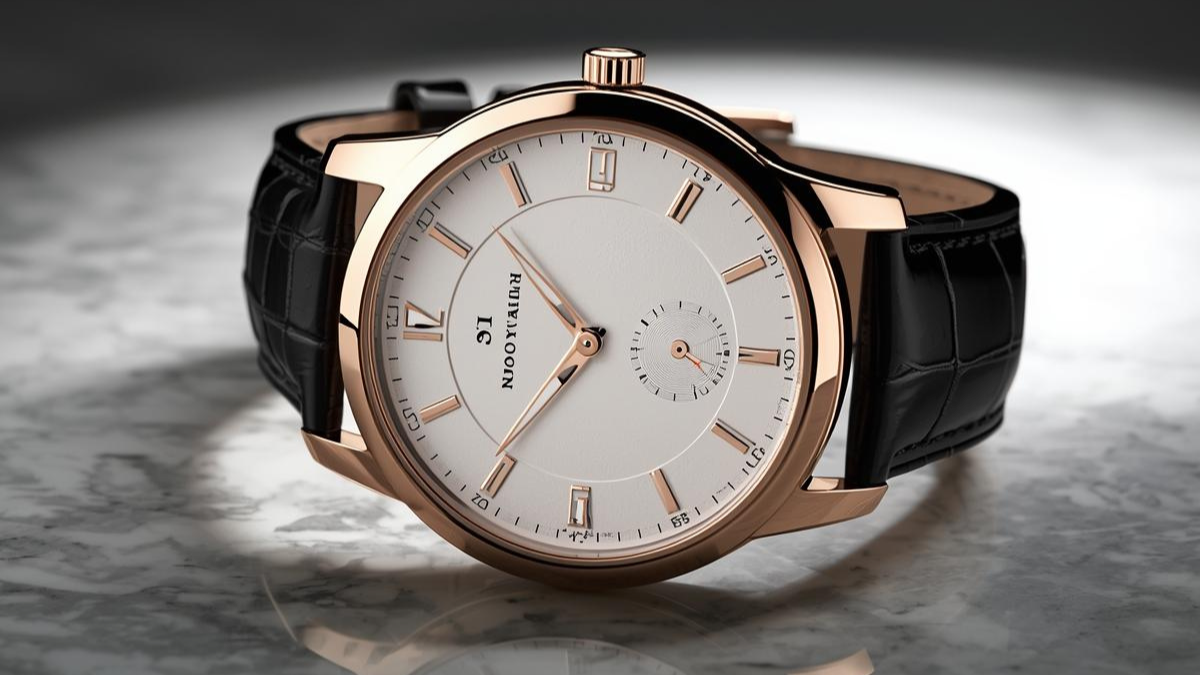
What makes Naoya Hida watches instantly recognizable is a design language that feels both deeply familiar and entirely new. Naoya Hida’s aesthetic DNA includes:
1. The 9 O’Clock Small Seconds
Almost all Naoya Hida watches feature a small seconds sub-dial at 9 o’clock—a unusual position that immediately distinguishes them. This isn’t a stylistic choice; it’s a technical necessity. Naoya Hida uses Valjoux/ETA base movements (primarily 7750 architecture) and removes the chronograph mechanism, leaving the small seconds in its native 9 o’clock position.
Rather than fighting this, Naoya Hida embraced it as a signature. It’s a conversation starter, a detail that signals the watch is something different.
2. German Silver Dials with Hand-Engraved Numerals
Every Naoya Hida dial is made from German silver (a copper-nickel-zinc alloy) and finished with a matte, frosted, or grained texture. The Breguet numerals are hand-engraved by Keisuke Kanousing lacquer molds, creating a three-dimensional effect that can’t be achieved with printing.
Naoya Hida himself hand-applies cashew lacquer to protect the numerals and enhance their appearance—a process he learned from traditional Japanese lacquerware techniques.
3. 904L Stainless Steel Cases
While most watch brands use 316L stainless steel, Naoya Hida uses 904L steel—the same grade used by Rolex. This “super austenitic” stainless steel offers superior corrosion resistance and takes a finer polish, but it’s significantly more difficult to machine and finish.
Naoya Hida cases feature stepped bezels, concave slopes, and precise brushing that evoke 1940s dress watches but with modern precision.
4. Proportional Perfection
Naoya Hida is obsessed with proportions. The NH Type 1 is 37mm diameter, 9.8mm thick, 44mm lug-to-lug—dimensions that mirror the best mid-century dress watches. The NH Type 5(rectangular) measures 26mm wide, 43.5mm long, and 9.1mm thick—proportions that feel both vintage and contemporary.
Every element—hand length, numeral size, sub-dial placement—is calculated to create visual harmony that feels “right” even if you can’t explain why.
Naoya Hida Movements: Swiss Bases, Japanese Souls
Naoya Hida doesn’t manufacture movements from scratch. Instead, Naoya Hida takes a page from the greatest independent watchmakers and modifies existing calibers to his exact specifications.
The base is the Valjoux/ETA 7750—the legendary automatic chronograph movement designed by Edmond Capt in 1974. Naoya Hida removes the chronograph mechanism entirely, transforming it into a time-only or time-with-complication movement. Naoya Hida then:
- Replaces the automatic winding system with manual winding (for a more direct connection to the wearer)
- Modifies the click and click spring for enhanced winding tactility and sound
- Adds proprietary bridges with unique finishing
- Regulates and finishes each movement to chronometer standards
The result is a movement that looks and feels like it was designed specifically for the watch, not adapted from a generic caliber. As watch collector Eric Ku noted, Naoya Hida chose the 7750 architecture specifically because the sub-seconds position at 9 o’clock was “perfect” for his design vision.
For complications, Naoya Hida collaborates with specialists:
- NH Type 3 (moonphase) uses an ETA 7751 base
- NH Type 6 (perpetual calendar) uses a Cal. 3025PC developed with Habring² and Dubois-Dépraz
Naoya Hida Collections: Type 1 Through Type 6
Since 2018, Naoya Hida has released six main collections, each with multiple variations. Every model is limited to 10-20 pieces before being discontinued.
NH Type 1 – The Foundation (2018)
Naoya Hida’s first watch, featuring small seconds at 9 o’clock. The “1B” was the debut model, followed by variations like the 1D (2022) with improved case construction. Approximately 20 pieces of each variation are made.
NH Type 2 – Center Seconds (2020)
A cleaner design with central seconds and no sub-dial, appealing to those who prefer a more traditional layout. The “2A” model particularly caught collector Eric Ku’s attention.
NH Type 3 – Moonphase Complication (2021)
Naoya Hida’s first complication, featuring a moonphase at 6 o’clock. The moon disc is crafted from 18k gold with a separately applied moon. The “3B” variation adds a yellow gold case and lapis lazuli moonphase disc, limited to just 5 pieces (2025-2026).
NH Type 4 – Engraved Excellence (2022)
Features intricate hand-engraving on the dial by Keisuke Kano, taking the decorative arts to another level. The “Lettercutter” collaboration with The Armoury produced just 10 pieces.
NH Type 5 – Rectangular Form (2024)
Naoya Hida’s first non-round watch, inspired by 1920s Art Deco. The 5A measures 26mm wide, 43.5mm long, and 9.1mm thick, with a grained German silver dial and dauphine hands. Limited to 10 pieces (2024-2025) at JPY 3,000,000 (~USD 22,000).
NH Type 6 – Perpetual Calendar (2025)
Naoya Hida’s most complicated watch to date, featuring a perpetual calendar in a compact 37mm x 11.5mm 904L steel case. The Cal. 3025PC was developed with Habring² and Dubois-Dépraz. Limited to just 10 pieces.
Naoya Hida Craftsmanship: Japanese Art Meets Swiss Technique
What elevates Naoya Hida from a microbrand to a true manufacture is the obsessive level of hand-finishing:
Dial Creation:
- German silver blanks are prepared
- Keisuke Kano hand-engraves all numerals and markers using lacquer molds
- Naoya Hida hand-applies cashew lacquer to protect the numerals and enhance their appearance
- Multiple layers are built up to create three-dimensional depth
Case Finishing:
- 904L steel is machined to precise specifications
- Stepped bezels are polished to mirror finish
- Case sides are brushed with perfect grain alignment
- Every edge is beveled and polished by hand
Movement Modification:
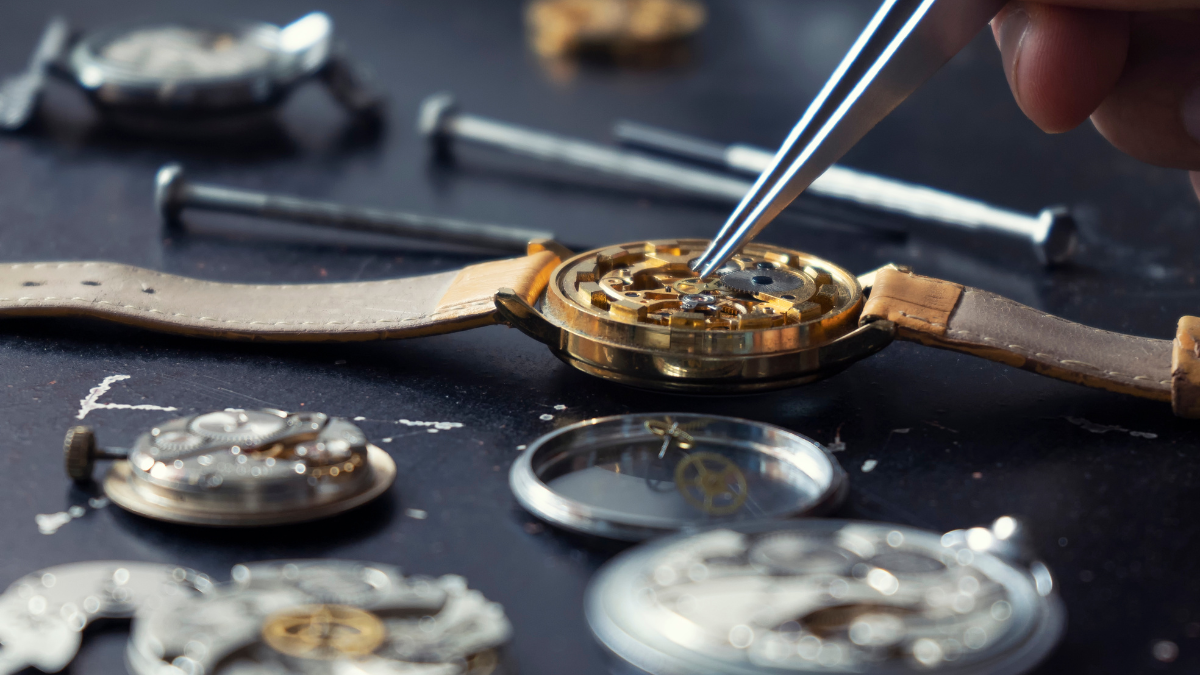
- The 7750 base is completely disassembled
- Chronograph mechanism is removed
- Manual winding components are installed
- Proprietary bridges are added
- Each movement is regulated to -2/+8 seconds per day
Assembly:
- Each watch is assembled by Kosuke Fujita from start to finish
- Naoya Hida personally inspects every piece before delivery
- The process takes weeks per watch, not hours
This isn’t manufacturing. It’s artisanal production at its purest.
Naoya Hida Business Model: Direct and Transparent
Naoya Hida & Co. operates on a direct-to-consumer model that would make most luxury brands nervous. There are no authorized dealers, no multi-brand retailers, no distribution networks. Watches are sold directly from the atelier to collectors, often through a lottery system when demand exceeds supply.
Naoya Hida’s website is remarkably transparent, publishing:
- Exact production numbers for each model
- Detailed specifications and pricing
- The complete history of each collection
- High-resolution images showing every detail
This transparency isn’t a gimmick—it’s a reflection of Naoya Hida’s belief that true luxury doesn’t need to hide behind mystery. When you’re making 10 watches, you can afford to be open about every detail.
Pricing is substantial but not outrageous for the level of craftsmanship:
- NH Type 1D: JPY 2,145,000 (~USD 16,000)
- NH Type 3B-3 (gold): JPY 4,180,000 (~USD 31,000)
- NH Type 5A: JPY 3,000,000 (~USD 22,000)
- NH Type 6 (perpetual): JPY 4,500,000 (~USD 33,000)
Naoya Hida Recognition: From Cult Favorite to Darling
For the first few years, Naoya Hida & Co. remained a cult favorite among Japanese collectors and a small circle of international enthusiasts. Then something shifted.
Media Coverage:
- Hodinkee featured the brand multiple times, with Eric Ku calling it “the Japanese microbrand I’m obsessed with”
- Revolution Watch collaborated on limited editions
- Monochrome, Time+Tide, and other publications began regular coverage
Collector Response:
- Watches sell out immediately via lottery
- Secondary market prices exceed retail
- Collectors travel to Tokyo specifically to visit the atelier
- The brand has been called “the Japanese F.P. Journe” by collectors who recognize the parallel: both are small-scale independents that prioritize design coherence, hand-finishing, and philosophical integrity over production volume.
But Naoya Hida rejects such comparisons. He isn’t trying to be the Japanese version of anyone. He’s creating something that could only come from his specific experience: three decades selling the world’s best watches, distilled into a personal vision of what watchmaking should be.
What Makes Naoya Hida Unique and Famous
Several factors distinguish Naoya Hida from both Swiss heritage brands and other Japanese independents:
1. The Salesman’s Perspective
Unlike most watch founders who come from technical or design backgrounds, Naoya Hida’s three decades as a sales professional gave him unique insight into what collectors actually value. He understands that heritage means nothing without execution, that marketing means nothing without substance, and that price means nothing without intention.
2. Neo-Classical Revisionism
The “Modern Vintage” philosophy isn’t about copying old watches—it’s about channeling the essence of what made them magical while improving every detail through modern techniques. It’s revisionism, not replication.
3. Intentional Scarcity
With just 50-100 watches annually, Naoya Hida creates genuine scarcity, not artificial limitation. Every watch is made by hand, inspected personally, and sold directly. This isn’t a strategy; it’s the only way Naoya Hida knows how to make watches.
4. Transparent Production
Publishing exact production numbers for each model is unprecedented in luxury watchmaking. It creates trust, manages expectations, and makes each piece’s rarity verifiable rather than marketed.
5. The 9 O’Clock Seconds
That unusual sub-seconds position—born from technical necessity—has become the brand’s signature. It’s instantly recognizable, creates conversation, and signals that the watch is something different.
6. 904L Steel Obsession
Using Rolex-grade steel when most independents use 316L demonstrates commitment to quality over cost. The material is harder to work with but takes a finer finish and offers superior durability.
7. Complete Vertical Integration (Within Scale)
While the team is tiny, they control every aspect: design, case manufacturing, dial engraving, movement modification, assembly, and sales. Nothing is outsourced except the base movement architecture.
Naoya Hida Philosophy: Modern Vintage as Way of Life
“Modern Vintage” isn’t just a marketing tagline for Naoya Hida—it’s a complete design philosophythat permeates every decision:
On Design: “I don’t want to invent the very new design, new shape. I want to create a very classic watch.” This restraint is radical in an industry obsessed with novelty.
On Production: “I believe that true craftsmanship requires human scale.” This conviction explains why Naoya Hida refuses to expand beyond seven people, even when demand could support growth.
On Transparency: “When you’re making 10 watches, you can afford to be open about every detail.” This honesty builds trust in an industry often criticized for opacity.
On Quality: “Every watch that leaves the atelier has been personally touched, inspected, and approved by the people who conceived it.” This accountability ensures standards that mass production can never match.
On Legacy: “I’m not trying to be the Japanese version of anyone. I’m creating something that could only come from my specific experience.” This authenticity is what resonates with collectors tired of homogenized luxury.
Naoya Hida Future: Intentional Growth Without Compromise
As Naoya Hida & Co. approaches its 10th anniversary in 2028, the brand faces the same challenge that confronts all successful independents: how to grow without losing what makes you special.
Naoya Hida has been clear about his path forward:
- No wholesale distribution – direct sales only, maintaining the relationship with collectors
- No dramatic scaling – production may increase modestly, but never beyond what seven people can make excellently
- No compromise on materials – 904L steel, German silver dials, hand-engraving, and cashew lacquer will remain standard
- No departure from Modern Vintage – the neo-classical revisionist approach is the brand’s permanent identity
- No rush into new complications – each complication (like the perpetual calendar) will only be attempted when the team has mastered it completely
This disciplined approach ensures that Naoya Hida & Co. will remain what it is: a human-scale manufacture making watches for people who understand that true luxury is about intention, not ostentation.
Conclusion: The Salesman Who Became a Master Watchmaker
The story of Naoya Hida & Co. is the story of what happens when someone spends three decades learning an industry from the inside, then has the courage to walk away and do it his own way.
Naoya Hida didn’t start a watch company because he wanted to be a watchmaker. Naoya Hidastarted it because he wanted to prove a point: that the most important thing in luxury watchmaking isn’t heritage, marketing, or even technical complexity—it’s intention.
From his tiny atelier in Tokyo, with just seven people, Naoya Hida creates watches that channel the magic of the 1930s-1960s golden age while improving every detail through modern techniques. Naoya Hida uses 904L steel when others use 316L. Naoya Hida hand-engraves dials when others print them. Naoya Hida publishes exact production numbers when others hide them. Naoya Hidasells directly when others use dealers.
The result is a brand that produces fewer than 100 watches per year, yet commands prices of $16,000-$33,000 and sells out immediately via lottery. A brand that has been called “the Japanese F.P. Journe” by collectors who recognize the parallel: both prove that small scale, philosophical integrity, and obsessive quality can create value that mass production never could.
But perhaps the most remarkable thing about Naoya Hida & Co. is what it represents: proof that a salesman who truly understands his product can become a craftsman who truly honors it.
In an industry increasingly dominated by conglomerates and marketing machines, Naoya Hida has created something that feels almost impossible: a watch company that makes exactly what it wants to make, exactly how it wants to make it, for exactly the people who appreciate it.
That’s not just watchmaking. That’s integrity made mechanical.
Stories from Independent Watchmaking
Naoya Hida’s neo-classical approach stands alongside other visionary independents who’ve rewritten the rules. Otsuka Lotec proves that industrial aesthetics and self-taught watchmaking can win GPHG awards, while Alan Birchall demonstrates that a single craftsman can spend 2.5 years making one watch entirely by hand. What unites Naoya Hida, Otsuka Lotec, and Birchall is a shared commitment: they each make fewer than 100 watches annually, personally inspect every piece, and refuse to compromise their philosophical vision for commercial scale.
If you enjoy Naoya Hida’s revisionist dress watches, Felipe Pikullik’s astronomical pieces from Berlin show a different path to the same independent ideal