


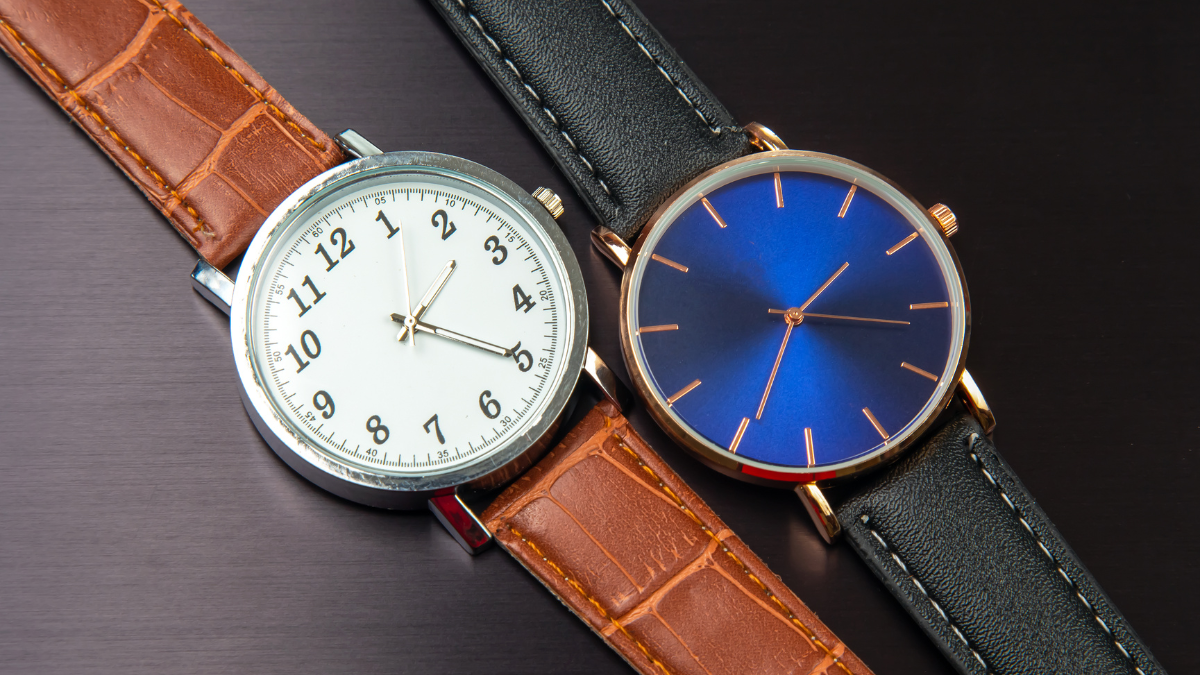
Picture a Geneva auction room in full swing. On the rostrum, a modest, time‑only wristwatch in platinum—no coronet, no Calatrava cross, no century‑old brand name on the dial. The bidding opens above its original retail price. Hands keep going up. When the hammer finally falls, the watch has sold for close to one million US dollars. The maker? Not Rolex, not Patek Philippe, not Audemars Piguet—but Rexhep Rexhepi, a young independent watchmaker working under his own name in Geneva.
Scenes like this would have been almost unimaginable twenty years ago. For most of the late 20th century, “vintage watch collecting” meant a familiar canon of big‑brand icons: pre‑Daytona chronographs, early Royal Oaks, Calatravas and perpetual calendars. Independent watchmakers, if they were mentioned at all, lived in the footnotes. Today, however, a tightly knit group of perhaps twenty key neo‑vintage references—made between roughly the late 1980s and early 2000s by a handful of independent masters—has become one of the most electric corners of the secondary market.
Their names are starting to sound like a parallel pantheon: Daniel Roth, François‑Paul Journe, Philippe Dufour, Kari Voutilainen, Vianney Halter, Denis Flageollet of De Bethune, Bart and Tim Grönefeld, and Rexhep Rexhepi of Akrivia. Their early watches—Souscription tourbillons and 37 mm resonances, Simplicities and Dualities, Vingt‑8s and Observatoires, Antiquas and DB28s, 1941 Remontoire and the Chronomètre Contemporain—have quietly become the new grails of serious collecting.
To understand why these “vintage independent watchmakers” sit at the center of the neo‑vintage revolution, it helps to follow their stories from the beginning.
From maisons to mavericks: Daniel Roth builds the bridge
The modern independent movement does not start in a garage; it starts inside some of the most venerable names in Swiss watchmaking. In that sense, Daniel Roth is the bridge between the old maisons and the later wave of independents that now dominate collectors’ wish‑lists.
Born in Nice in 1945, Roth trained at watchmaking school before heading to the Vallée de Joux, where he worked at Jaeger‑LeCoultre and then Audemars Piguet. In the mid‑1970s, the Chaumet brothers, then owners of Breguet, recruited him to help revive the legendary but commercially moribund name. Roth threw himself into the archives, studying the work of Abraham‑Louis Breguet and translating that 18th‑century language into modern wristwatches: fluted coin‑edge cases, guilloché dials, and elegantly constructed complications.
For more than a decade, he effectively rebuilt Breguet’s visual and technical identity from the ground up. But by 1988, Roth wanted to go further than any corporate brief would allow. He left to found his own brand in Le Sentier, signing his name to a distinctive “double ellipse” case and a programme of complicated, low‑volume watches aimed squarely at connoisseurs.
The first decade of Daniel Roth production produced many of the references that today define neo‑vintage independent collecting. The Papillon jump‑hour, for instance, used a wandering‑jumping hour and retrograde minutes displayed through a butterfly‑shaped aperture; just 110 numbered pieces were made to mark the brand’s tenth anniversary. Early tourbillons and chronographs took the same double‑ellipse architecture and applied it to high‑complication movements, often with traditional hand‑finishing and Breguet‑inspired detailing.
Financial reality, however, caught up. By the mid‑1990s Roth sold a controlling stake to The Hour Glass in Singapore, and the brand was eventually absorbed into Bulgari. Only recently has the “Daniel Roth” name been revived as a high‑end sub‑label within LVMH.
Collectors, though, never let go of those early pieces. In retrospective analyses of the 1990s watch market, Daniel Roth appears alongside Franck Muller, Roger Dubuis and F.P. Journe as one of the pioneers of independent, neo‑vintage watchmaking. Auction catalogues today increasingly single out his double‑ellipse chronographs, Papillon jump‑hours and early tourbillons as historically important references—watches that now sit comfortably in any “top twenty” list of foundational vintage independents.
François‑Paul Journe: the independent who moved the market
If Roth showed that an independent name could matter, François‑Paul Journe proved that it could move the entire market.
Born in Marseille in 1957, Journe trained at the École d’Horlogerie de Paris, but his true education took place in his uncle’s restoration workshop, working directly on complicated pocket watches by Breguet, Janvier and other 18th‑ and 19th‑century masters. By 1978 he had completed his first tourbillon pocket watch. In the following decade, he built constant‑force tourbillons, automatic chronometers and even a moderne version of Breguet’s sympathique clock for Asprey.
In 1989, Journe moved to Sainte‑Croix and co‑founded a movement‑making company with Vianney Halter and Denis Flageollet. The firm, Techniques Horlogères Appliquées (THA), developed complicated calibres for other high‑end brands, giving Journe deep experience in both design and industrialisation. Still, he felt compelled to create under his own name.
His first wristwatch tourbillon was finished in 1991, but it was not until 1999 that the brand “F.P. Journe – Invenit et Fecit” officially launched at Baselworld. That motto—“he invented and he made”—was more than Latin flourish; it signalled that the movements were conceived and manufactured in‑house.
The debut collection included the Tourbillon Souverain with remontoire d’égalité, the first wristwatch to implement this historical constant‑force system. It was quickly followed by the Chronomètre à Résonance in 2000, exploiting the phenomenon of resonance between two balance wheels, and then the Octa line of automatic watches built around a long‑power‑reserve base calibre.
Within a decade, the young manufacture had also produced a grand sonnerie, monopusher chronographs and inventive calendar watches, earning the Aiguille d’Or—the top prize at the Grand Prix d’Horlogerie de Genève—three times, more than any other contemporary brand.
This creative streak laid the groundwork for what has become the most spectacular escalation in independent‑watch auction history. A F.P. Journe Souscription Tourbillon—one of just twenty early tourbillons sold by subscription to fund his new manufacture—went from roughly 161,000 US dollars at auction in 2016 to approximately 3.54 million dollars in 2021, an increase of over twentyfold in five years. In 2025, a Tourbillon Souverain set a new Journe record at around 7.3–8.3 million US dollars, surpassing even Philippe Dufour’s Grande & Petite Sonnerie as the most expensive wristwatch ever sold by an independent living watchmaker.
The same gravitational pull can be seen in other key neo‑vintage references. Early 37 mm Chronomètre à Résonance watches, once a connoisseur’s niche, have been documented rising from about 256,000 dollars in 2016 to roughly 880,000 by 2022. Time‑only Chronomètre Bleu models—never officially limited but produced in modest numbers—regularly trade at multiples of their original price.
For collectors mapping out the core cluster of twenty or so significant vintage independent watches, Journe’s first‑decade production—Souscription Tourbillon, early Tourbillon Souverain, 37 mm Résonance and Octa—sits squarely in the centre of the constellation.
Philippe Dufour: the standard of perfection
Where Journe built a full‑scale manufacture, Philippe Dufour chose radical smallness.
Born in 1948 in Le Sentier, Dufour graduated from the local watchmaking school in 1967 and joined Jaeger‑LeCoultre. After a stint in the Caribbean and time spent assembling complicated movements for Gérald Genta and Audemars Piguet, he set up on his own in 1978, working largely as a restorer and contract watchmaker.
His first great independent project was a run of five Grande & Petite Sonnerie pocket‑watch movements for Audemars Piguet between 1982 and 1988. Encouraged by the experience, he presented the first wristwatch Grande & Petite Sonnerie under his own name at Basel in 1992. It combined a minute repeater with a striking mechanism that could sound the time “en passant” in either grand or small sonnerie mode—arguably the most complex function in traditional horology.
Four years later, in 1996, Dufour introduced the Duality, the first wristwatch to use two balance wheels linked by a differential to average out rate errors. He had planned to produce twenty‑five pieces, but ultimately completed only nine; the architecture was simply too demanding for his tiny workshop.
Then, in 2000, he pivoted. After years of complicated mechanisms, he launched the Simplicity: a small, time‑only watch with small seconds, conceived as the purest possible canvas for traditional hand‑finishing. The movement, calibre 140, featured generous, flowing bridges, finger‑cut internal angles and mirror‑polished steelwork rendered to an almost obsessive standard.
Dufour initially intended to build 100 Simplicity pieces in 34 and 37 mm, but demand—especially from Japan—pushed him eventually to around 200. Even counting all his complicated watches, total Dufour production from 1992 to 2020 is estimated at roughly 230 pieces.
Secondary‑market results reflect that microscopic supply. A Duality that cost around 150,000 dollars in 2007 later sold for close to 915,000; another, in pink gold, has since hammered near four million. Simplicity prices, too, have climbed from the mid‑hundreds of thousands—around 260,000 euros in a 2016 Phillips sale—to more than one million Swiss francs for a twentieth‑anniversary example in 2020.
For collectors who type “Philippe Dufour Simplicity price” into search bars, the answer is increasingly less a fixed number and more a range of possibilities, all of them high. In any list of the twenty most important vintage independent watches, Dufour’s Grande & Petite Sonnerie, Duality and early Simplicities occupy several of the top slots.
Kari Voutilainen: modern classicism, Finnish soul
If Dufour set the bar for finishing, Kari Voutilainen gave it a distinct aesthetic voice.
Born in 1962 in Finland, Voutilainen trained at the Tapiola watchmaking school before moving to Switzerland to attend the WOSTEP programme. After graduation, he worked on high‑complication prototypes and eventually returned to WOSTEP as an instructor, teaching future generations of watchmakers how to assemble and adjust tourbillons and minute repeaters.
In 2002 he opened his own workshop in Môtiers, a quiet village in the Swiss Jura. Early work included unique and small‑series pieces built around vintage ébauches, like the Observatoire, which used Peseux 260 chronometer movements reworked to a near‑obsessive standard. The aesthetic language—warmly toned dials with multi‑texture guilloché, Breguet‑inspired numerals, and beautifully sculpted, rounded lugs—was classic yet unmistakably individual.
In 2011, Voutilainen unveiled the Vingt‑8, his first watch built around an in‑house movement, calibre 28. The movement features a large, slow‑beating balance and a novel escapement with two escape wheels delivering direct impulse to the balance, paired with a balance spring that combines a Breguet overcoil externally and a Grossmann curve internally. Bridges and cocks in German silver are hand‑finished with wide, even Côtes de Genève, sharp interior angles and deeply polished bevels. Dials are engine‑turned in‑house on century‑old rose engines.
Over time, the Vingt‑8 family has become one of the pillars of neo‑vintage independent collecting. Analyses of the “independent watch price explosion” in recent years often use Voutilainen’s Vingt‑8 as a reference point, noting auction prices in the ballpark of 120,000 US dollars and double‑digit appreciation as the market reassesses his early production.
In the mental map of collectors, the Observatoire and early Vingt‑8s now sit alongside Dufour’s Simplicity and Journe’s first‑series tourbillons as key entries in that cluster of twenty or so foundational vintage independent watches.
Vianney Halter: future past, in brass and steel
Where Voutilainen’s world is one of classical restraint, Vianney Halter’s feels like a Jules Verne dream.
Born near Paris in 1963, Halter graduated from the École d’Horlogerie de Paris and spent a decade restoring antique clocks and watches, honing a deep understanding of traditional construction and finishing. In 1989 he moved to Switzerland and joined the same THA complications atelier where Journe and Flageollet were collaborating on high‑end movements for brands such as Audemars Piguet and Franck Muller.
In 1994 he founded Manufacture Janvier (named after Antide Janvier, one of history’s great clockmakers) and continued to supply movements to larger brands. When the Asian financial crisis slowed orders in the late 1990s, he turned inward and created something entirely his own: the Antiqua.
The Antiqua is a perpetual calendar wristwatch that looks more like a riveted ship’s instrument than a conventional timepiece. Hours, minutes, day, date and month are each displayed on separate “portholes,” screwed to an asymmetrical case with visible rivets and a heavily machined bezel. Halter has described the style as “Future Past”—a speculative vision of what the 19th century thought the future might look like.
The watch made an immediate impact. It caught the attention of Philippe Dufour and the Académie Horlogère des Créateurs Indépendants (AHCI), cementing Halter’s reputation as an artistic outlier in independent horology. Over the decades, he has produced only around ten different wristwatch models under his own name, and total production remains under 500 pieces.
On the secondary market, the Antiqua has become the emblem of his work. Recent examples at Sotheby’s and other houses have comfortably exceeded their high estimates, underlining its status as an icon of independent design rather than a curiosity. It is now routinely mentioned in any short list of “top twenty” independent vintage watches, not only for its rarity but for the way it expands the vocabulary of what haute horlogerie can look like.
De Bethune: blue‑titanium astronomy for the wrist
Even among independents, De Bethune occupies a singular space, fusing 18th‑century ideals with aggressively contemporary forms.
The brand was founded in 2002 in L’Auberson by Italian dealer and collector David Zanetta and French fourth‑generation watchmaker Denis Flageollet. The name itself references the 18th‑century watchmaker Chevalier de Bethune, signalling a conscious link to the “golden age” of mechanical horology.
Flageollet’s path to De Bethune ran through restoration work at the Musée d’Horlogerie du Locle, a period at Michel Parmigiani’s workshop, and then his role as a co‑founder and technical director at THA. By the time De Bethune launched, he had already spent years thinking about the mechanics of resonance, high‑frequency escapements and ultra‑fine finishing.
From the beginning, De Bethune pushed boundaries. The brand pioneered silicon balance springs, patented spear‑shaped titanium balance wheels with white‑gold masses, and developed sophisticated shock‑protection and automatic winding systems. Visually, it introduced a distinctive vocabulary of deep‑blued titanium, polished steel “floating” lugs and architectural bridges.
The DB28, introduced in the early 2010s, crystallised this style. With its articulated lugs, slim profile and open‑worked dial revealing star‑studded night‑sky plates, it is both unmistakable and deeply rooted in mechanical craft. The DB28 won the Aiguille d’Or at the Grand Prix d’Horlogerie de Genève in 2011; other models such as the DB29 Maxichrono Tourbillon and DB25 Starry Varius Chronomètre Tourbillon later took home further GPHG prizes.
Despite this recognition, De Bethune remains a true micro‑manufacture, producing on the order of 200 watches per year. As collectors have become more attuned to independent watchmakers, early DB28s and other first‑generation De Bethune references have come to represent some of the purest expressions of 21st‑century horological design. In market analyses, De Bethune is frequently cited as one of the “leaders” whose performance supports the independent segment as a whole.
In any practical sense, those first DB28s already function as neo‑vintage: historically anchored, limited in number, and recognised by the market as reference points in modern watch design.
The Grönefeld brothers: constant force from the church tower
If De Bethune’s inspiration lies in the observatories and workshops of Switzerland, Bart and Tim Grönefeld’s story begins in a Dutch church tower.
The brothers grew up in Oldenzaal, a town in the east of the Netherlands where their grandfather Johan and father Sjef maintained the massive clock of the Saint Plechelmus basilica. That early‑20th‑century clock used a remontoire—a constant‑force mechanism that periodically recharges a small spring to deliver even torque to the hands, ensuring consistent operation despite temperature swings and thick oils.
After training and working in Switzerland, including stints at Renaud & Papi (Audemars Piguet’s complications workshop), the brothers returned to the Netherlands and launched their eponymous brand. Their early watches featured tourbillons and classical complications, but it was the 2016 introduction of the 1941 Remontoire that truly crystallised their identity.
Named for their father’s birth year, the 1941 Remontoire houses an in‑house calibre with an eight‑second remontoire d’égalité that provides constant torque from full wind until a stop‑work mechanism kicks in around 36 hours. The bridges are shaped like Dutch “bell gables,” echoing local architecture, and are finished with frosted surfaces, wide, polished chamfers and hand‑engraved text. Dials can be solid silver, frosted or guilloché, the latter often made by Kari Voutilainen’s dial atelier.
The watch won the Men’s Watch prize at the Grand Prix d’Horlogerie de Genève in 2016, and the brothers have since taken home multiple GPHG awards. Secondary‑market data suggests typical 1941 Remontoire prices now sit in the high five‑ to low six‑figure US‑dollar range depending on metal and configuration, with documented examples across roughly 76,000 to 110,000 dollars.
Crucially, annual production for the brand remains under 100 watches. That makes the 1941 Remontoire not just a successful reference but one of the core neo‑vintage independent pieces that define the top tier of modern collecting.
Rexhep Rexhepi and Akrivia: the new classic
Among today’s independents, Rexhep Rexhepi stands as the clearest example of how quickly a single watchmaker can ascend to the very top of the market.
Born in Kosovo in 1987, Rexhepi arrived in Switzerland as a child refugee and began an apprenticeship at Patek Philippe at just 15 years old. After Patek, he joined BNB Concept, a complications specialist supplying high‑end brands, and later worked at F.P. Journe. In 2012, he launched his own brand, Akrivia, in Geneva, initially working from his small apartment.
The name Akrivia derives from a Greek term relating to precision and exactitude, and the early lineup—references AK‑01 through AK‑06—focused on complex tourbillon and chiming chronographs with bold, almost sci‑fi case designs. From the outset, however, the movements displayed a level of hand‑finishing and construction that drew comparisons to the best of traditional Swiss watchmaking.
Around 2018, Rexhepi took a decisive step: he began signing certain watches under his own name, starting with the Rexhep Rexhepi Chronomètre Contemporain (RRCC I). The RRCC I is a time‑only watch with small seconds and a classical, almost austere dial, but its movement is a masterpiece of layout and finishing, with finger bridges, inward angles and polished steelwork executed to an exceptional standard.
The RRCC I won the Men’s Watch prize at the Grand Prix d’Horlogerie de Genève and quickly developed a waiting list measured in years. With Akrivia producing around 40 watches per year, the imbalance between demand and supply is stark.
The secondary‑market watershed came in 2023, when the first “standard” RRCC I—neither charity piece nor special edition—appeared at Phillips in Hong Kong. Against an estimate that reflected its original retail under 70,000 dollars, the watch sold for around 7.24 million Hong Kong dollars including fees, approximately 924,000 US dollars. That result placed Rexhepi’s time‑only watch in the same conversation as the great tourbillons of Journe and the Simplicities of Dufour.
In the mental “top twenty” of vintage independent references, the RRCC I and Rexhepi’s early Akrivia‑signed tourbillons have become indispensable entries, marking the moment when the neo‑vintage revolution decisively extended into the 21st century.
What unites the new grails of vintage independent watchmaking
Viewed together, the stories above form more than a set of engaging biographies; they describe a coherent shift in what collectors value when searching for “vintage independent watch market” opportunities.
Several threads tie these roughly twenty or so grail‑level references together:
1. Extremely low production
Dufour’s total life output is measured in the low hundreds. Rexhepi’s atelier produces around 40 watches a year. De Bethune makes roughly 200 annually; Grönefeld fewer than 100. Even F.P. Journe, the “large” independent, works in thousands, not tens of thousands.
2. Foundational significance
Each grail reference marks a turning point: Roth’s double‑ellipse tourbillons and Papillon in the 1990s; Journe’s Souscription Tourbillon and early Resonance; Dufour’s Duality and Simplicity; Voutilainen’s Observatoire and first‑series Vingt‑8; Halter’s Antiqua; De Bethune’s early DB28; Grönefeld’s 1941 Remontoire; Rexhepi’s RRCC I.
3. Auction validation
The market has not been slow to recognise this importance. Journe’s Souscription Tourbillon and Tourbillon Souverain have crossed into multi‑million‑dollar territory. Dufour’s Dualities and Simplicities have broken the million‑franc line. The Antiqua now reliably exceeds estimates; the RRCC I has approached one million dollars at auction.
4. Artisanal finishing and historical continuity
Many of these independents began in restoration, and it shows. Movement architecture, black‑polished steel, hand‑cut bevels and traditional escapements link their watches to the work of Breguet, Janvier and other historical greats, even when the designs themselves are futuristic.
In an era when some mass‑produced luxury watches have come to feel like financial instruments, these independent neo‑vintage pieces are valued precisely because they resist industrial scale. Each one anchors a specific narrative of craft, risk and vision.
Navigating the neo‑vintage independent watch market
For collectors and enthusiasts drawn to this world—whether for passion, investment, or a mixture of both—it is helpful to approach “vintage independent watchmakers” with a framework in mind.
1. Start with the stories, not the spreadsheets.
Auction records provide useful benchmarks, but the most rewarding way into this field is through the makers’ histories: Daniel Roth leaving Breguet to build his own double‑ellipse complications; Journe funding his manufacture with Souscription tourbillons; Dufour refining hand‑finishing to an art form in Le Sentier; Voutilainen balancing Finnish roots with Swiss classicism; Halter dreaming in brass and steel; Flageollet bringing observatory‑grade thinking to De Bethune; the Grönefeld brothers translating a church tower’s remontoire to the wrist; Rexhepi going from refugee to GPHG‑winning master.
Understanding these arcs makes it easier to see why specific references matter.
2. Focus on keystone references.
Not every watch from a great name is destined to be a grail. The cluster that currently drives the vintage independent watch market is relatively tight: Roth’s early double‑ellipse tourbillons and Papillon; Journe’s Souscription Tourbillon, first‑series Tourbillon Souverain and early 37 mm Resonance; Dufour’s Grande & Petite Sonnerie, Duality and Simplicity; Voutilainen’s Observatoire and Vingt‑8; Halter’s Antiqua; early De Bethune DB28s; Grönefeld’s 1941 Remontoire; Akrivia AK‑series tourbillons and the RRCC I.
3. Examine condition and originality with a loupe—literally.
Because so much of the value resides in hand‑finishing, over‑polished cases or aggressively refinished movements can significantly undermine a piece. Hand‑cut bevels should retain sharp internal angles; black‑polished steel components should show a clear “mirror” at various angles. Collectors are increasingly intolerant of compromised finishing in this segment.
4. Expect illiquidity at the micro level.
While the headline references trade actively enough to generate auction news, the market for specific variants or metals can be thin. A platinum RRCC I in one dial configuration is not necessarily interchangeable with a gold one in another. Patience—on both buying and selling—is part of the territory.
5. Think like a patron.
Nearly all of these makers are still alive; many are still at their benches. Approaching them purely as vehicles for financial gain misses the essence of the independent watch space. The most satisfying experiences in this corner of collecting often involve studio visits, direct relationships with ateliers, and a genuine desire to sustain an endangered craft.
Tomorrow’s classics, ticking today
Taken together, the lives and works of Daniel Roth, François‑Paul Journe, Philippe Dufour, Kari Voutilainen, Vianney Halter, Denis Flageollet and David Zanetta of De Bethune, Bart and Tim Grönefeld, and Rexhep Rexhepi form a coherent story: the story of how a handful of individuals rewrote the script for what “important” watches look like in the late 20th and early 21st centuries.
In place of vast marketing budgets and industrial output, they offered something else: tiny production runs, deep roots in traditional craft, and a willingness to pursue idiosyncratic visions. Auction houses and specialist dealers eventually caught up, and now their neo‑vintage creations—produced in the tens or low hundreds—trade at levels once reserved exclusively for big‑brand icons.
The result is a quiet revolution in what it means to collect “vintage watches.” The grails of the future are increasingly likely to bear the names of individual watchmakers rather than corporate logos. When a Souscription Tourbillon, a Simplicity, an Antiqua or a Chronomètre Contemporain crosses the block, the room falls silent not because of a brand heritage brochure, but because everyone present understands the human story behind the movement.
For enthusiasts exploring the vintage independent watch market today, that creates a rare window. The great neo‑vintage independents are already historically significant, yet still close enough in time that their creators can share the details of how and why they were made. Their output is finite, but not yet fully frozen in the amber of museum vitrines.
Decades from now, when collectors speak of “the new grails,” the conversation will almost certainly circle back to this small group of makers and to a compact constellation of perhaps twenty references. Those watches will be described as the pieces that turned the phrase “vintage independent watchmakers” from a niche interest into a central chapter of horological history—a chapter that is still, with every hammer fall and every tick on the wrist, being written.