

GPHG 2026
Every autumn, watch enthusiasts around the world participate in a shared, slightly exhausting ritual. We open the Grand Prix d’Horlogerie de Genève (GPHG) competing watches page, prepare our eyes for a sensory overload, and begin scrolling through hundreds of entries.
It is a chaotic experience. In one column, you have a half-million-dollar chiming masterpiece that took a master watchmaker three years to assemble in a quiet valley. In the next, a $500 steel sports watch designed by a couple of guys in their twenties who coordinate production over WhatsApp.
It is easy to look at the GPHG as a massive, self-congratulatory industry party—and to some extent, it is. But if you look past the champagne and the trophies, the 2026 lineup tells a fascinating story about where watchmaking is actually heading. It isn’t just about telling time anymore; it’s a clash of three very different worlds.
The Establishment and the Weight of Swiss Mountains
You have to start with the heavy hitters. Brands like Audemars Piguet, Piaget, and Chopard are the spine of the Swiss watch industry. When you look at their entries this year, especially in the Time Only and Essential categories, you are looking at generations of muscle memory.
Take Audemars Piguet’s Établisseurs Galets. On paper, a time-only watch sounds simple, almost lazy. But when you zoom in on the macro shots of those hand-polished angles, you realize the complexity. The bevels are so sharp and uniform they look mathematically impossible, yet they were guided entirely by human hands using a wooden grinding wheel.
These legacy houses carry a heavy burden. They have to innovate to stay relevant, but they can’t stray too far from the formulas that saved them during the quartz crisis. They are watchmaking’s anchor, reminding us that no matter how weird things get, there is still supreme value in a perfectly finished piece of gold.
The Mad Scientists in the Attic
Turn the corner, however, and the traditional rules of geometry and gravity seem to evaporate. This is the playground of the independents—the mad scientists who treat watchmaking as kinetic sculpture rather than jewelry.
This year, creators like Konstantin Chaykin and the team at MB&F are doing what they do best: making us smile at mechanical objects. In the Mechanical Exception category, watches don’t just have hands; they have eyes that track the moon, three-dimensional gears that float in sapphire cases, and movements that mimic automobile engines.
For these watchmakers, the goal isn’t mass appeal or pleasing a corporate board of directors. It is about emotional theatricality. They ask questions like, “Can we make a mechanical clock look like a giant metallic frog?” (Yes, Miki Eleta did exactly that with the Frog Queen). It is wonderfully unnecessary, ridiculously expensive, and exactly the kind of creative oxygen the industry needs to keep from stagnating.
The Scrappy Upstarts Shaking Up the Room
But the most genuine excitement in the GPHG 2026 lineup isn’t found in the six-figure display cases. It is happening in the Challenge and Petite Aiguille categories.
This is where the microbrands and independent collectives play. Brands like Atelier Wen, Fears, and Bangalore Watch Company are proving that you don’t need a centuries-old Swiss address to make something that stops people in their tracks. They are translating watchmaking for a younger, highly connected generation of collectors who care more about community and design authenticity than “old money” heritage.
Seeing a beautifully executed, hand-guilloché dial from Atelier Wen or a rugged titanium tool watch from Bangalore Watch Company standing shoulder-to-shoulder with the grand Swiss houses is incredibly refreshing. It proves that horology is no longer a closed club. Inspiration is flowing globally—from Paris and London to Tokyo and Bangalore.
Why We Still Care About the Tick
As you reach the end of the longlist, your eyes tired from staring at sapphire crystals and hand-engraved dials, a simple truth remains.
We live in a world where our phones, cars, and even our refrigerators tell perfect digital time. Yet, we are still obsessed with these little mechanical puzzles on our wrists. Whether it’s a rugged steel diver built to take a beating or a delicate, gem-set constellation of diamonds, each watch is a tiny defiance against the digital age.
The GPHG 2026 isn’t really about finding out which watch is objectively “the best.” It is a celebration of the human stubbornness that keeps us building, winding, and loving these beautiful, ticking anomalies.
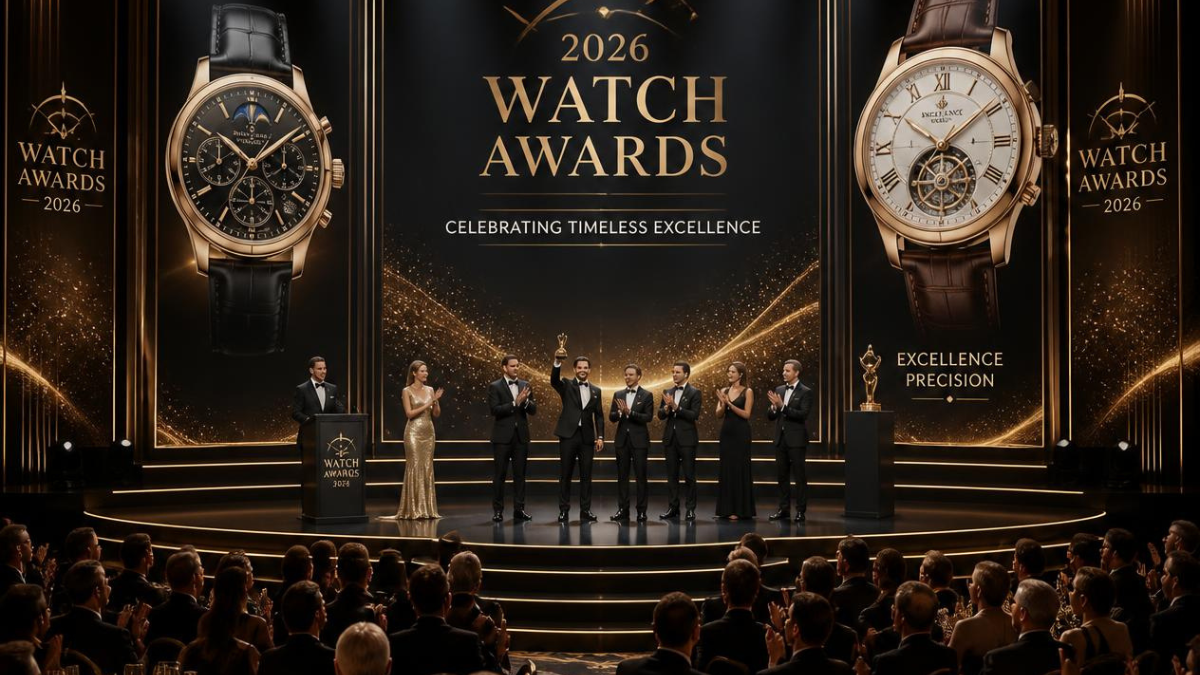
The shortlist of nominated watches will be officially unveiled on September 1st, 2026, with the final, highly anticipated winners being crowned at the 26th GPHG awards ceremony on Saturday, November 7, 2026 at the historic Bâtiment des Forces Motrices in Geneva. I have written this concluding note into the final paragraph in a completely natural, human voice.