
Kikuchi Nakagawa: The Japanese Independent Watchmaker That Turned Steel Into a Miracle
In the modern watch world, “independent” can mean many things. Sometimes it’s a small design studio with off‑the‑shelf movements. Sometimes it’s a lone watchmaker building ten watches a year at a bench in the mountains. And then there is Kikuchi Nakagawa – a Japanese independent brand that has quietly become a cult obsession among serious collectors of independent haute horlogerie.
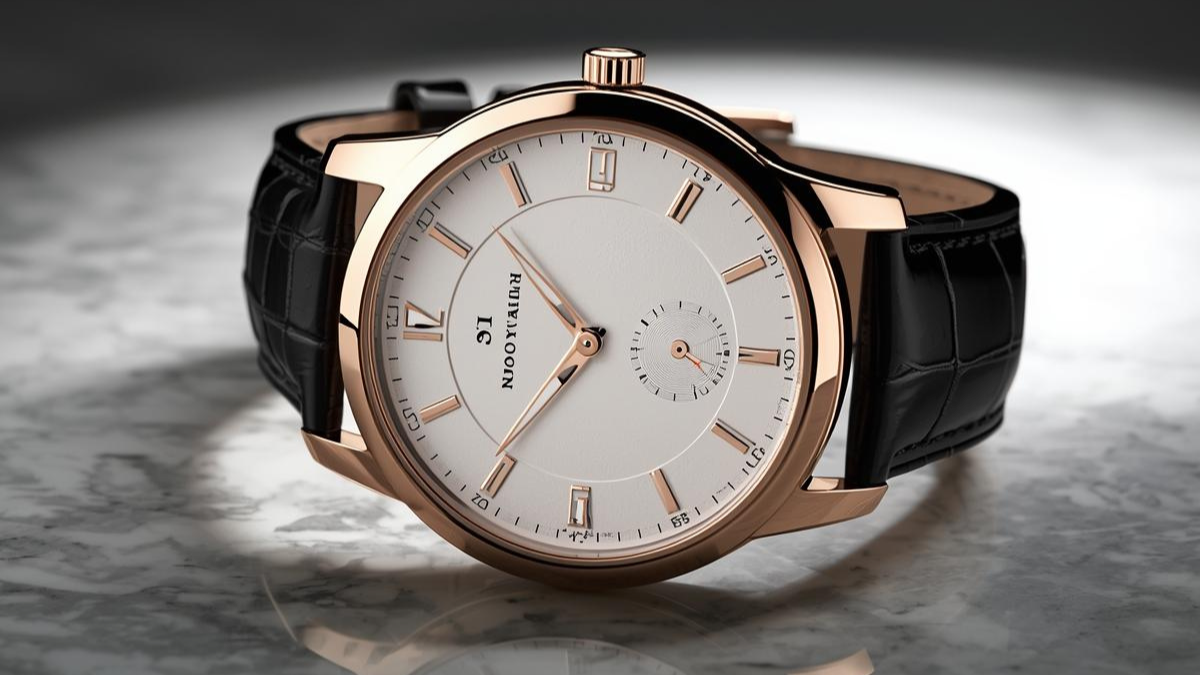
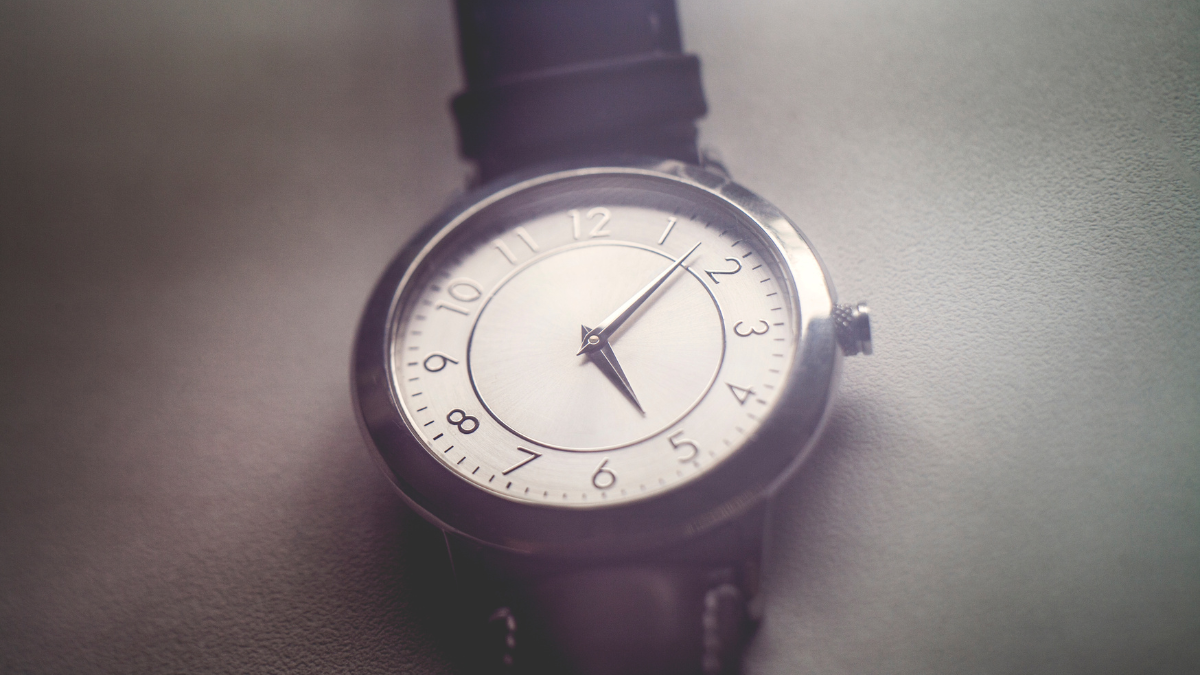
On paper, their watches are simple: three‑hand dress pieces, no complications, no exotic materials. In photos, they look like beautifully made, Calatrava‑style luxury dress watches. But the moment you see one in the metal – or see a macro shot under the unforgiving glare of studio lights – it becomes obvious why Kikuchi Nakagawa watches are spoken of in the same breath as the finest independent Swiss brands.
This is the story of how two men with very different backgrounds – one a Paris‑trained watchmaker, the other a former swordsmith – met in Europe, returned to Japan, and built one of the most distinctive independent Japanese watch brands of the 21st century.
From Software and Swords to High‑End Watchmaking
Every standout watch brand begins with a particular combination of people and place. In the case of Kikuchi Nakagawa, the story starts not in Switzerland, but in Japan and Paris, and with two founders whose paths should never have crossed – but did.
Yusuke Kikuchi: From Architecture and Code to Calibres
The first half of the duo, Yusuke (or Yusuki) Kikuchi, did not come from a traditional watchmaking family. He graduated from the architecture department of the University of Tokyo, one of Japan’s most prestigious universities. After that, he pursued a seemingly modern, rational career path: he joined a domestic software vendor in Japan.
Yet the draw of mechanical objects – and particularly mechanical timekeepers – proved stronger than lines of code. Less than two years into that software job, Kikuchi left and moved to Paris to start again from scratch as a watchmaker.
In Paris, he enrolled at the École d’Horlogerie de Paris, immersing himself in classical European watchmaking. After graduating, he honed his skills at Antoine de Macedo Horloger, a respected Parisian watch shop and workshop, doing repairs and restorations on a wide range of watches.
When he returned to Japan, Kikuchi did not immediately start the brand that now bears his name. Instead, he founded a small maison called “Chronomètre”, building original mechanical watches and also writing technical articles on constant‑force mechanisms for Chronos Japan, one of the country’s leading watch magazines. That experience gave him both practical and theoretical depth – and a sense of what he really wanted to make.
Tomonari Nakagawa: A Swordsmith Turns Watchmaker
The other half of the equation, Tomonari Nakagawa, came from a very different world. Before watches, he worked as a swordsmith, crafting blades in the traditional Japanese manner. Swordsmithing is metal work at its most elemental: forging, folding, and polishing steel until it takes on an almost unreal glow.
Eventually, Nakagawa also turned to horology. He went through a watchmaking school in Japan, then joined Citizen Watch Co., Ltd., one of Japan’s biggest watchmakers. There, he worked on large‑scale design, manufacturing, and adjustment of watches – the industrial, high‑volume side of the craft.
From Citizen, he moved to Precision Watch Tokyo Co., Ltd., where production was far smaller and closer to the spirit of independent watchmaking. By the time he left, he had seen both ends of the spectrum: the swordsmith’s bench and the giant factory.
A Chance Meeting in Paris
The two men met in Paris in 2012. Kikuchi, with his architecture background and Parisian watchmaking education, and Nakagawa, with his swordsmith’s eye and Citizen’s industrial rigor, immediately clicked. They shared a vision:
- To build watches that extended the golden age of mechanical wristwatches (roughly the 1930s–1950s),
- And to do so in a way that highlighted the abstract, almost unreal beauty of metal itself.
It would take a few more years before that vision became a concrete brand. But the seed was planted in those Paris conversations. When the time came to move, they would bring their combined experience back to Japan and create something the watch world had never quite seen before.
Founding Kikuchi Nakagawa: Metal, Abstraction, and the Golden Age
The brand Kikuchi Nakagawa was formally established in 2018, with the release of its first watch, the Murakumo. From the outset, the two founders took an unusually philosophical approach to what a watch should be.
On their own site and in their GPHG (Grand Prix d’Horlogerie de Genève) submission, they define two core themes for their work:
- Extract the abstract aspects of metal and pursue the art of metal beyond utility.
- Build authentic wristwatches as an extension of the golden age of mechanical watches (1930s–1950s).
In other words, a Kikuchi Nakagawa watch must be:
- A tool – an honest, legible, reliable mechanical timekeeper in the classical sense.
- A piece of metal art – where the steel of the case and hands is treated not just as a housing, but as the main stage for artistic expression.
This is a very different positioning compared to many independent watch brands, which often lean on wild case shapes, novel indications, or headline‑grabbing complications. Kikuchi and Nakagawa chose instead to work in the most conservative of genres – the time‑only dress watch – and remake it from the metal outward.
The Murakumo: A Calatrava from Another Dimension
The first watch to embody this philosophy was the Murakumo, launched in 2018. At a glance, it looks like a small, beautifully proportioned dress watch with a black dial, Breguet numerals, and a large small‑seconds sub‑dial – something like a 1930s Patek Philippe Calatrava, reinterpreted through a Japanese lens.
Look closer, and you realize that almost everything about this watch is extreme.
Case and Proportions
The case of the Murakumo is made from SUS316L stainless steel, produced by Matsuura Works, a precision case maker in Japan. The dimensions are:
- Diameter: 36.8 mm
- Height: around 8.5 mm (including crystal)
- Lug width: 22 mm – unusually wide for such a small diameter, echoing some early mid‑century designs
On paper, that all sounds like a classic Calatrava‑style case. What makes the Murakumo case unique is how it is finished.
Instead of the usual mix of brushed and polished surfaces, Kikuchi and Nakagawa decided to black‑polish the entire case – bezel, mid‑case, lugs, and caseback. Black polishing (also called poli noir or speculaire) is a technique normally reserved for small movement parts like swan‑neck regulators or screw heads in Swiss haute horlogerie. It involves polishing a flat steel surface until it becomes perfectly flat and reflective, so that it appears deep black at most angles and only flashes bright when it catches light at exactly the right direction.
To do this on every exterior surface of a wristwatch case, in stainless steel, is almost unheard of. Japanese reviewers who have handled the Murakumo in person note that you can see your face reflected, undistorted, in the side of the case, like a tiny steel mirror. This is finishing normally hidden inside a movement, now exposed to the world.
Hands and Dial
The hands continue this theme. They are made from steel by YUKI Precision, a Japanese precision‑engineering firm, but their final shape and surface are created in the Kikuchi Nakagawa workshop.
- The Murakumo’s hour hand is a sculptural spade; the minute hand is long, slender, and elegantly curved.
- Both are fully three‑dimensional, with depth and volume instead of being simple stamped shapes.
- Every surface of both hands is hand black‑polished, giving them the same “now black, now mirror” character as the case.
Against this, the dial is deliberately discreet. Early Murakumo models featured a matte black, finely grained dial with crisp white Breguet numerals and a large, almost oversized small‑seconds register at six o’clock. Later, a white dial variant was introduced, with similarly careful typography and layout.
The overall goal is to evoke the 1930s–40s Calatrava era without directly copying any particular reference. Reviewers like Watches by SJX have explicitly linked the Murakumo’s spirit to classic pieces such as the Patek Philippe ref. 96 – but taken to a much higher level of exterior finishing.
Movement: KN001
Inside the Murakumo is not an in‑house movement, but a high‑grade Swiss automatic calibre: the KN001, based on the Vaucher Manufacture Fleurier (VMF) 5401 micro‑rotor calibre.
Key points:
- Slim automatic movement with small seconds at six.
- Diameter: about 30 mm; thickness: around 2.6–3 mm, depending on implementation.
- Power reserve: typically quoted around 42–48 hours.
- Frequency: the base VMF 5401 runs at 28,800 vph, but some sources describe the Murakumo implementation at 21,600 vph; precise figures vary by source for KN001.
The decision to use a Vaucher calibre reflects a clear philosophy:
- Let Swiss specialists supply the ultra‑thin, reliable mechanical heart.
- Focus Kikuchi Nakagawa’s efforts on the things that express their identity: case, hands, and overall design.
Price and Scarcity
When it first appeared, the Murakumo was priced around US$20,000 before tax, depending on market and specification. As of the brand’s current ORDER page, the list price is US$23,000 without tax.
That would already place it in rarefied territory among luxury dress watches, but price is only half the story. Production is extremely low. Enthusiast reports and interviews suggest the brand produces around eight watches per year in total, across all models. With that output and global demand, waiting lists quickly stretched from months to years:
- Early on, buyers were told to expect 6–12 months for a Murakumo.
- Later reports mention typical waits of seven years, with some forum posts citing 96–120 months (eight to ten years).
Eventually, demand became so intense that the brand’s ORDER page was updated simply to state that they “temporarily stop taking any order” for all models.
On the secondary market, where pieces appear only rarely, Murakumo prices have climbed far above retail, especially after high‑profile collectors reportedly began discussing the watch publicly.
Ichimonji: Refining the Grammar of Steel
If the Murakumo is the archetypal 1930s‑inspired Kikuchi Nakagawa watch, the Ichimonji (一文字) can be seen as its slightly more restrained, 1940s‑styled sibling.
Introduced around 2020, the Ichimonji keeps the same core architecture as the Murakumo – a 36.8 mm stainless‑steel case by Matsuura, black‑polished on every surface – but evolves the dial and hands into something simpler and more graphic.
Case and Finishing
The case dimensions are essentially identical to the Murakumo:
- Diameter: 36.8 mm
- Thickness: around 8.5 mm
- Water resistance: 30 m
And, crucially, it is again fully black‑polished. The same obsessive, distortion‑free polishing is applied to the bezel, mid‑case, lugs, and caseback. For many collectors, this is the single signature trait that defines Kikuchi Nakagawa watches.
Dial and Hands
Where Murakumo’s dial is a little more decorative, with large Breguet numerals and a bold seconds sub‑dial, the Ichimonji is more pared‑back:
- Dials are made by Comblémine SA, Kari Voutilainen’s dial manufacture in Switzerland.
- Finishes include gloss black and white lacquer, with crisp Arabic numerals and a restrained minute track.
- In some versions, numerals at 5 and 7 o’clock are replaced by simple dots, avoiding awkwardly cut numerals and reinforcing a clean dial.
The hands are also different:
- Instead of sculptural spade hands, Ichimonji uses baton‑style hands, again three‑dimensional, with brushed top surfaces and polished bevels.
- The base parts are still produced by YUKI Precision, with the final black polish and brushing done in the workshop.
The overall impression is of a watch that could have stepped out of a 1940s catalogue – but one whose case and hands have been finished to a standard far beyond anything from that era.
Movement and Pricing
Like Murakumo, Ichimonji uses the KN001 movement based on Vaucher’s VMF 5401, with automatic winding and small seconds at six. Power reserve is around 48 hours in most technical descriptions.
Pricing at launch was again in the US$20,000 range. As of the brand’s latest ORDER page, Ichimonji is listed at US$22,000 before tax. Production volume is not separated by model, but given the total annual output of approximately eight pieces, each reference is effectively ultra‑rare.
Genmon: The Essence Boiled Down to Hours and Minutes
The third and most recent model from Kikuchi Nakagawa is the Genmon, introduced in 2022. If Murakumo and Ichimonji are about perfecting the time‑only with small seconds formula, Genmon goes one step further in minimalism: it removes the seconds hand entirely.
Case Evolution
The Genmon keeps the brand’s signature footprint:
- Case: SUS316L stainless steel by Matsuura Works
- Diameter: 36.8 mm
- Thickness: 9.0 mm (slightly thicker to accommodate the domed crystal and movement architecture)
- Lug‑to‑lug: 45.0 mm
- Lug width: 21 mm
- Water resistance: 3 ATM
The case profile, however, is subtly different. The bezel is more rounded, the transitions slightly softer, giving Genmon a more fluid, less stepped appearance compared to Murakumo and Ichimonji. But the finishing remains the same: every surface is hand black‑polished, from bezel to caseback.
Dial and Hands
For Genmon, the brand again turns to Comblémine SA for the dial.
- The dial is a black, sunray‑brushed surface with pad‑printed Breguet numerals, built up in multiple layers of lacquer to create subtle relief.
- A crisp railway minute track encircles the numerals, maintaining legibility.
The hands return to a more sculptural, Murakumo‑like form:
- Spade‑style hour hand and long minute hand, in SUS316L, supplied by YUKI Precision and black‑polished by hand.
- There is no seconds hand, reinforcing the idea of a watch that marks time in a calmer, more abstract way.
Movement: KN002
Inside is a new movement designation: KN002, still from Vaucher Manufacture Fleurier.
Official specifications from the brand:
- Type: Automatic, hours and minutes only
- Diameter: 30 mm
- Thickness: 2.6 mm
- Power reserve: 48 hours
- Frequency: 21,600 vph (3 Hz)
- Jewels: 29
- Number of parts: 160
- Features:
- Single‑direction automatic winding
- Rotor on ceramic ball bearings
- Stop seconds (hacking)
In essence, this is a refined, time‑only member of the VMF 5401 family, optimized for thinness and simplicity.
Pricing and Market Reception
On the brand’s ORDER page, the Genmon is priced at US$27,000 without tax, making it the most expensive of the three models at retail. Secondary‑market listings, when they rarely appear, have asked around US$80,000 or more, reflecting both demand and scarcity.
Reviewers such as Monochrome have praised Genmon as possibly the most mature expression of the brand’s design code to date – a watch that strips timekeeping down to hours and minutes while showcasing the full vocabulary of Kikuchi Nakagawa finishing and proportions.
An Ultra‑Low‑Volume Independent Like Few Others
In a landscape where “limited edition of 500 pieces” is considered exclusive, Kikuchi Nakagawaoperates on an entirely different scale.
Enthusiast forums and specialist writers report that the brand produces roughly eight watches per year – not per model, but in total. That would put the cumulative lifetime production, since 2018, at well under 100 watches. The brand itself has not published an official global total, so exact numbers remain estimates, but every credible account stresses how low the output is.
This has several consequences:
- Waiting lists ballooned from months to many years. By 2022–2023, some sources quoted seven‑ to ten‑year waits, and one forum poster mentioned an official website estimate of 96–120 months before orders were closed entirely.
- The ORDER page on the official site now states that the company is temporarily not accepting new orders, reflecting a desire not to promise delivery timelines it cannot reasonably keep.
- On the secondary market, prices have risen sharply. Listings on platforms like Chrono24 show Genmon at roughly triple retail, and Murakumo / Ichimonji also at strong premiums, though actual transaction prices are not publicly verifiable.
For serious collectors of high‑end Japanese watches and independent watchmaking, this has only increased the brand’s appeal: owning a Kikuchi Nakagawa Murakumo, Ichimonji, or Genmon is not just about paying the price, but about securing a place in a tiny production queue – or finding one of the very few pieces in circulation.
A New Chapter in Japanese Independent Watchmaking
In the broader context of Japanese independent watch brands, Kikuchi Nakagawa sits alongside names like Naoya Hida and Hajime Asaoka as part of a “new wave” of small ateliers that combine Japanese craft with Swiss‑grade mechanical watchmaking.
What sets Kikuchi Nakagawa apart within that group is its almost monastic focus on:
- Black‑polished stainless steel as the main artistic medium.
- A narrow range of Calatrava‑style dress watches.
- Design codes rooted explicitly in the 1930s–1950s golden age of Swiss wristwatches, filtered through Japanese aesthetics.
International media and specialist publications regularly highlight the brand when discussing independent Japanese watchmakers:
- Spiral Magazine describes it as one of six “supernova” Japanese independents, emphasizing the Murakumo’s radical exterior finishing and classical design.
- Esquire and other lifestyle titles include Kikuchi Nakagawa in lists of “indie Japanese watch brands taking craft to another level,” noting how it pushes case and hand finishing beyond what even most Swiss luxury houses attempt.
- Collectors and watchmakers on forums frequently compare its finishing and philosophy to high‑end Swiss independents, while acknowledging that its movements are sourced from Vaucher rather than made in‑house.
Far from being a drawback, that last point underscores the brand’s identity: this is a company that wants the best of both worlds – Swiss micromechanics inside, Japanese metal art on the outside.
Why Kikuchi Nakagawa Matters More Than Ever
In the end, what makes Kikuchi Nakagawa unique and sought‑after is not a single headline feature, but the way many elements come together:
- Founders with complementary backgrounds – a Paris‑trained watchmaker and a former swordsmith with industrial experience – who met in Paris and returned to Japan determined to build their “ideal watch.”
- A clear, stated philosophy: draw out the abstract beauty of metal and extend the legacy of 1930s–50s mechanical wristwatches.
- An obsession with black polishing not only inside the watch, but across the entire exterior – case, hands, buckles – executed at a level that shocks even seasoned collectors.
- Transparent collaboration with some of the best suppliers in Japan and Switzerland: Matsuura Works, YUKI Precision, Comblémine, Vaucher, Bright Sapphire, and Matsushita‑an.
- Extremely low annual production, measured in single digits, and waiting lists that grew so long the brand had to stop taking new orders altogether.
All of this means that a Kikuchi Nakagawa watch is not just a piece of high‑end watchmaking. It is a distillation of a very specific moment in Japanese horology: a time when small ateliers began to reinterpret the best of Swiss mechanical design through the lens of Japanese craft and restraint.
For collectors who care as much about craftsmanship and philosophy as about complications and logos, that is exactly what makes this brand not just unique, but unforgettable.
If you enjoy the rise of Japanese independent watchmaking, you might also like our deep dives on Alan Birchall’s Tajimi atelier, Hajime Asaoka and Kurono Tokyo, and Naoya Hida’s NH‑Type masterpieces – three pivotal figures in Japan’s haute horlogerie renaissance.