
From a London Antique Shop to Kyoto’s Workshop: The Extraordinary Story of KUOE Watches
In the heart of Kyoto, Japan—a city renowned for its preservation of ancient traditions and artisanal craftsmanship—a remarkable story of modern watchmaking unfolds in an unassuming workshop. This is the story of KUOE, a relatively young but increasingly celebrated independent watch brand that has captivated global collectors with its philosophy of timeless design and meticulous Japanese craftsmanship. But like all great stories, this one didn’t begin in a workshop at all. It began with a serendipitous moment in a London antique shop, a university student named Kenji Uchimura, and a profound realization about what makes design truly timeless.
The Moment That Changed Everything: 2010 London
The year was 2010. Kenji Uchimura, a university student from Japan, was studying language in London, England—one of the world’s great centers of history, art, and culture. Like many students abroad, he spent his free time exploring the city’s neighbourhoods, discovering its character through wandering and chance encounters. One afternoon, while walking through London’s streets, he found himself drawn into an antique watch shop. What happened next would become the genesis of a brand that, over a decade later, would deliver more than 40,000 watches to collectors across the globe.
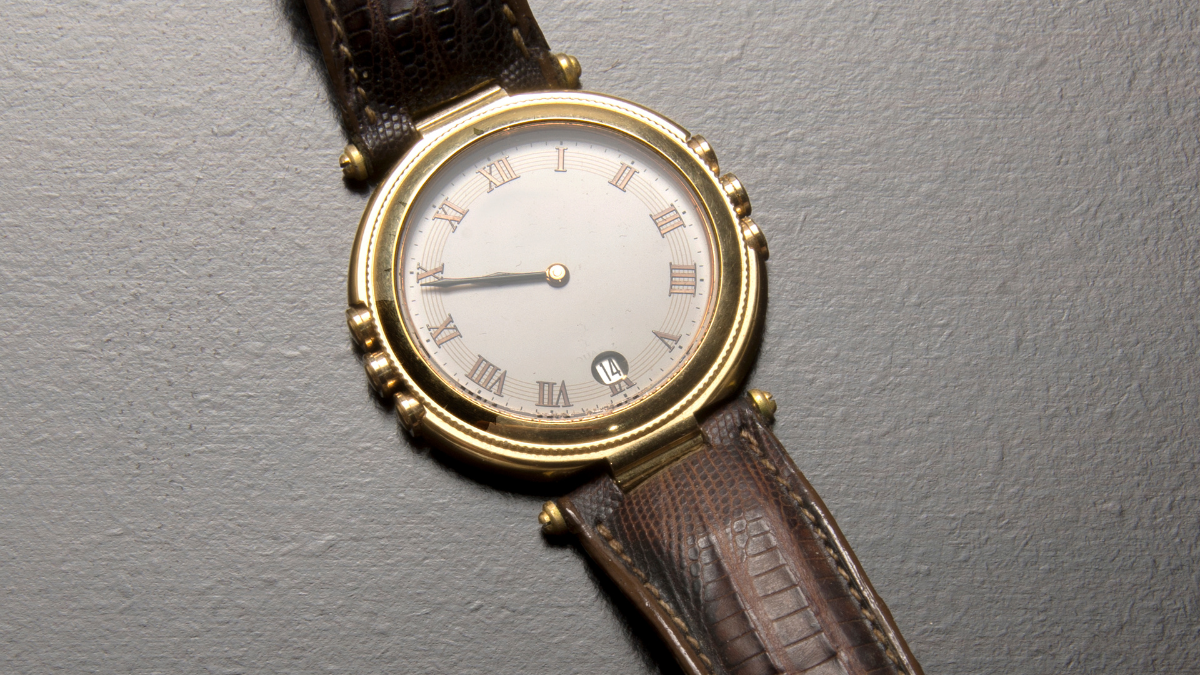
Inside that shop sat a collection of hand-wound wristwatches, their dials yellowed by decades of sunlight, their cases bearing the patina of years—some spanning back to the 1940s, others from the 1950s, 1960s, and 1970s. These were not pristine museum pieces locked behind glass. They were worn watches, lived-in timepieces that had measured time through wars, through ordinary days, through the lives of people now gone. What struck Uchimura most profoundly was not their age, but their vitality. Despite decades of accumulation, despite the passage of time, these watches still ticked. They still worked. They still functioned with a quiet reliability that felt almost miraculous.
But there was something more than mere functionality that captivated him. These vintage watches possessed an ineffable warmth—a quality he couldn’t fully articulate but could deeply feel. They weren’t designed to impress or to be admired from a distance. They were designed to be worn, to be lived with, to become part of daily life. Their dials carried typography and proportion choices that felt honest, unadorned, purposeful. The hands moved with mechanical certainty. The cases, in their modest proportions—typically 34 to 38 millimetres, considerably smaller than contemporary watches—seemed designed for the wrist rather than for advertisement.
In that London antique shop, Kenji Uchimura experienced a revelation that would later become the philosophical foundation of KUOE: something truly classic doesn’t fade with time. Something truly classic is loved and revered universally, across generations, across cultures, across borders. A great design doesn’t become irrelevant because it’s old; it becomes more valuable precisely because it has endured.
The Years of Apprenticeship: 2010-2020
For most people, such a moment would remain a pleasant memory, filed away among university experiences. For Uchimura, it became an obsession and a calling. After graduating from university, he didn’t pursue a conventional career path. Instead, he made a deliberate choice that would shape the next decade of his life: he returned to Japan and joined a watch company based in Kyoto.
This wasn’t a casual decision. Kyoto, Japan’s ancient capital, is not merely a geographic location—it’s a cultural repository. For over a thousand years, Kyoto has been the center of Japanese artistic tradition, Japanese aesthetics, and Japanese craftsmanship. The city is home to master artisans in countless disciplines: ceramicists, textile weavers, lacquer workers, woodcarvers, painters. More recently, Kyoto became a center of Japanese watchmaking excellence. Uchimura’s choice to work in Kyoto was deeply intentional. He was positioning himself in the precise place where he could study both the philosophy of Japanese craftsmanship and the practical knowledge of watch manufacturing.
For several years, Uchimura worked within the Japanese watch industry, gaining hands-on experience in design, manufacturing, movement selection, and business operations. During this period, his London epiphany crystallized into a concrete vision: he would create a watch brand that honored the timeless appeal of those 1940s-1970s vintage pieces, but craft them with contemporary reliability and the exacting standards of modern Japanese production. He would fuse British design sensibility (those classic military watches that had inspired him) with Japanese precision manufacturing and attention to detail.
Before launching his own brand, Uchimura gained further practical experience by launching a sub-brand dedicated to his vision of introducing classic design into new models of wristwatches. These early projects were laboratories for testing his design philosophy, refining his manufacturing processes, and validating his market thesis. He was preparing, with deliberation and care, for the moment when he would establish his own brand.
That moment came on April 1, 2020.
The Launch: KUOE Arrives (2020)
On April 1, 2020—a date that would later be reflected in the brand’s name—Kenji Uchimura officially established KUOE as an independent watch brand. The name itself carries personal meaning, encoded with precision: K (Kenji), U (Uchimura), O (October), E (Eight). The brand’s name is thus an acronym derived from the founder’s full name and birth date (October 8), a characteristically Japanese touch that combines personal significance with brand identity.
The first model to emerge from KUOE’s Kyoto workshop was the Old Smith 90-001—a 35-millimetre quartz watch that immediately signaled the brand’s design philosophy. This wasn’t a watch designed for technical specifications to be boasted about. It was designed to be worn, appreciated, and lived with. The Old Smith 90-001 featured a domed sapphire crystal, a clean dial, applied numerals, and proportions that harked back to vintage dress watches. It was a statement of intent: KUOE would not follow the contemporary trend toward larger cases (42mm, 44mm, even 46mm). It would instead revive the modest, wrist-proportionate sizing of earlier eras.
The timing of KUOE’s launch—April 2020—coincided with global lockdowns and economic uncertainty caused by the COVID-19 pandemic. For a nascent brand with no existing customer base, this could have been catastrophic. But KUOE’s foundational philosophy proved resilient. As people spent more time at home, as the pace of life slowed, as people contemplated questions of authenticity and meaning in an increasingly digital world, watch collecting experienced a remarkable renaissance. Vintage watches became objects of desire. Independent brands offering alternative perspectives to corporate giants gained attention. KUOE, launching with a clear vision at exactly the right cultural moment, found an audience.
The Brand Philosophy: “The Appeal of Classic Design from Kyoto to the World”
KUOE’s mission statement is deceptively simple: “The appeal of classic design—from Kyoto to the world.” Understanding this phrase requires understanding what KUOE means by “classic design.”
In contemporary consumer culture, “vintage” and “retro” are often used interchangeably, but KUOE draws a sharp distinction. A retro design applies vintage aesthetics superficially—like applying a filter to a modern watch. It might have a vintage colour palette or vintage-inspired dial typography, but the underlying design language remains contemporary. A classic design, by contrast, genuinely reconstructs the design language of a historical period. When KUOE creates a watch inspired by 1940s British military field watches, it’s not decorating a modern watch with vintage aesthetics. It’s rebuilding the proportions, the case architecture, the finishing, and the minimalist dial language of an actual 1940s field watch.
This distinction matters because it determines every design decision. When KUOE chose 35-38 millimetre case sizes—deliberately small by 2024 standards—it wasn’t being trendy or ironic. It was being historically accurate. Wristwatches of the 1940s-1960s were typically worn at these proportions because they were designed for actual wrists, not for display and ostentation. The sapphire crystal domes on KUOE watches recreate the gentle dome of vintage mineral or acrylic crystals, which subtly distorted the dial at the edges—an effect that added visual character. The dial typography, chosen with meticulous care, uses fonts and numerals contemporaneous with the period being referenced. The hand finishing on cases, combining polished and brushed surfaces, mirrors the finishing techniques of the era.
This historical fidelity creates an interesting philosophical outcome: KUOE watches feel more modern than many contemporary watches because they’re so firmly rooted in a specific historical moment. They don’t try to appeal to everyone. They appeal specifically to people who understand what they represent and why those choices matter.
The second part of KUOE’s mission—”from Kyoto to the world”—reflects Uchimura’s commitment to making this philosophy accessible globally. KUOE watches, though priced in the premium segment, are positioned as “accessible luxury”—not affordable mass-market watches, but not $10,000 luxury timepieces either. Prices range from approximately $368 USD for the entry-level Old Smith 90-001 quartz model to $859 USD for the premium Royal Smith 90-012 chronograph or the Sombrero 90-011 diving watch. This pricing strategy makes KUOE watches attainable for serious watch enthusiasts and collectors who might otherwise be priced out of premium watch purchasing.
The Manufacturing Philosophy: Hand-Assembled in Kyoto
One of KUOE’s most distinctive characteristics, and a primary justification for its premium pricing, is the commitment to hand-assembly in its Kyoto workshop. This is not a marketing affectation. Every KUOE watch is manually assembled at the brand’s facility in Kyoto, with movements produced entirely in Japan and remaining components sourced from Japan and Hong Kong depending on the specific model.
This statement might seem contradictory—if movements are made in Japan, why source other components from Hong Kong? The answer reveals KUOE’s pragmatic approach to manufacturing. The brand is willing to pursue best-in-class components regardless of geographic origin. What matters is the final assembly location and the quality of the final product. A KUOE watch is “Made in Japan” because it’s assembled in Japan and uses Japanese-made movements, the most technically critical component. The other components—whether a crystal is from Switzerland or Hong Kong, whether a spring is from Japan or Germany—matter far less than the integrity of the finished product and the quality control exercised during assembly.
This transparency about manufacturing—KUOE openly discusses its supply chain rather than presenting an artificially “100% Japanese” narrative—reflects maturity and honesty that appeals to sophisticated watch collectors. The brand doesn’t pretend to be something it isn’t. It simply commits to assembling high-quality watches using the best available components, with all assembly and quality control performed in its Kyoto workshop.
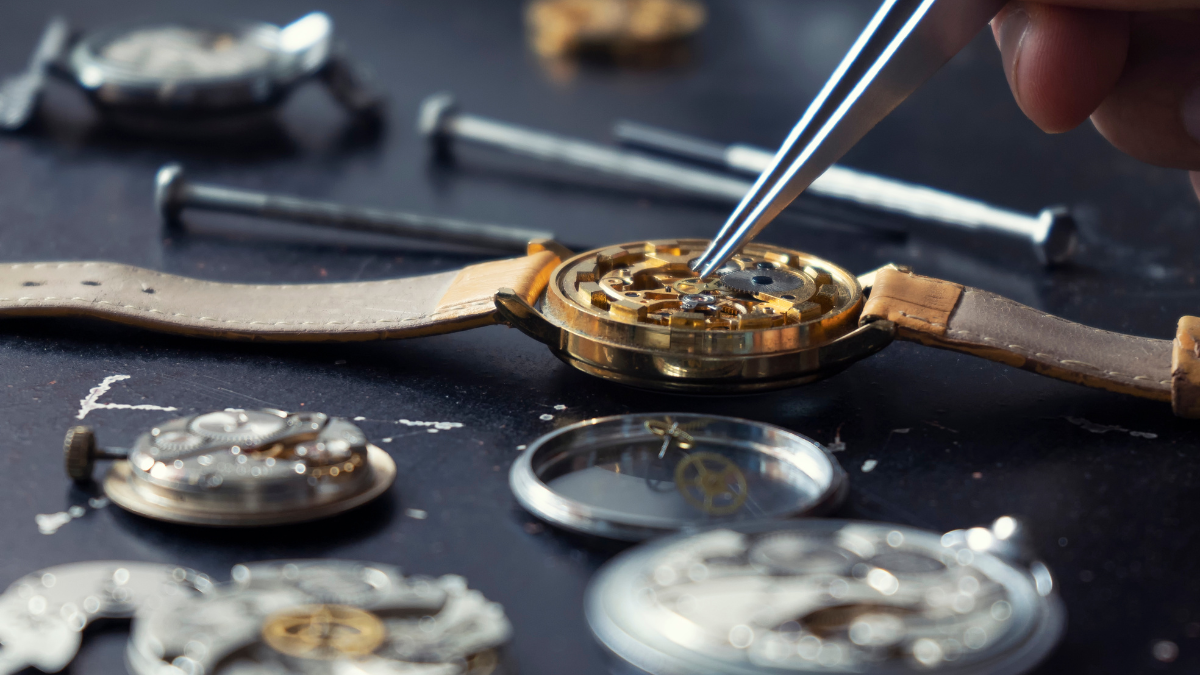
The workshop itself reflects KUOE’s accessibility philosophy. Located in the Nakagyo Ward of Kyoto (224 Eirakucho, Tohbeh Building #105), it’s not a grand flagship showroom with marble floors and pretentious atmosphere. It’s a working studio, accessible to the public, where visitors can observe watchmakers at their benches, tinkering with components and assembling watches. One notable customer, writing in Esquire India, described the experience of visiting the workshop as “stepping into a watchmaker’s studio”—a grey corridor, a bell at a nondescript door, then suddenly, a working workshop filled with specialists quietly focusing on their craft. Visitors are invited to customize their watches on the spot, selecting from different dial colors, hand styles, and strap options, with the possibility of purchasing an assembled watch on the same day. This model—simultaneously artisanal and accessible—exemplifies KUOE’s brand philosophy.
The Product Evolution: From Vision to Diverse Offerings
Since its 2020 launch with the Old Smith 90-001, KUOE has carefully expanded its collection while maintaining unwavering commitment to its design philosophy. Understanding the current lineup requires recognizing how each model addresses different collector needs while speaking the same design language.
The Old Smith Series: Field Watch Foundations
The Old Smith series represents KUOE’s core offering, inspired directly by British military field watches from the 1940s-1970s. The Old Smith 90-001, the inaugural model, houses a Seiko VD78A quartz movement in a 35-millimetre case with 50-metre water resistance. It’s a pure, minimalist dress watch—no date window, no complications, just a clean dial with applied numerals, a domed crystal, and the confidence of simplicity.
The Old Smith 90-002, released later and now the brand’s best-seller, represents the evolution of KUOE’s thinking. It’s available in 35-millimetre and 38-millimetre cases, houses a Seiko NH35 automatic movement (caliber NH38 in some references), and features 100-metre water resistance. More importantly, the 90-002 is available in multiple dial treatments—ivory, black, deep navy, forest green, and bronze case variants. The 90-002 became KUOE’s flagship through a combination of compelling design, authentic vintage inspiration, and Makuake crowdfunding success in 2023, where it raised over 13 million yen (later crowdfunding campaigns exceeded $85,000 USD equivalent).
The Old Smith 90-007 continues this lineage with additional refinements like blued steel hands, offering watchmakers’ technique elements that appeal to technical connoisseurs.
The Royal Smith Series: Premium Dress Watches
As KUOE matured, the brand developed the Royal Smith series to address collectors seeking higher-end dress watches while maintaining the core philosophy. The Royal Smith 90-006 ($699-772 USD) features a waffle-textured dial, Breguet-style numerals, and Miyota 9039 automatic movements—a higher beat-rate caliber (36,000 beats per hour versus the NH35’s 21,600) that creates a smoother sweep of the seconds hand. The Royal Smith series is available in 34-35 millimetre cases across multiple dial colors including silver, blue, and ivory.
The Royal Smith 90-008 and 90-010 address varying wrist sizes, with the 90-008 at 34 millimetres and the 90-010 at 38 millimetres, allowing KUOE to serve collectors with different wrist proportions while maintaining the brand’s commitment to vintage sizing.
Most recently, KUOE entered the chronograph category with the Royal Smith 90-012 ($859 USD), powered by the Japanese-made TMI NE86A automatic chronograph movement. This represents the brand’s most technically ambitious offering—a bi-compax chronograph (with 30-minute totalizer) in a 37-millimetre case with 50-metre water resistance. The 90-012 exemplifies KUOE’s maturing technical ambitions while remaining true to classic aesthetics.
The Sombrero 90-011: KUOE’s Diving Watch
In late 2024, KUOE completed a significant category expansion with the Sombrero 90-011 ($859 USD), its first true diving watch. The Sombrero features 200-metre water resistance, a compressor-style case referencing vintage super-compressor dive watches, an internal rotating bezel, and the Miyota 9039 movement. The Sombrero demonstrates KUOE’s evolution from pure dress watch brand to comprehensive classic watch manufacturer.
The Holborn 90-003: Addressing the Women’s Segment
Remarkably, KUOE has also addressed the women’s watch market—a segment largely ignored by most independent watch brands—with the Holborn 90-003. This 30-millimetre quartz watch brings KUOE’s design philosophy to a segment where choice and authenticity are scarce. This speaks to KUOE’s commitment to making “the appeal of classic design from Kyoto to the world” genuinely inclusive.
Global Recognition: From Microbrand to Industry Benchmark
The period from 2020 to 2026 has witnessed KUOE’s transformation from obscure microbrand to increasingly recognized independent watchmaker. The brand has achieved several remarkable milestones:
40,000+ Watches Delivered: As of late 2025, KUOE has delivered over 40,000 watches globally—a figure representing approximately 8,000 units annually since launch. For context, this positions KUOE well above typical microbrand scale (500-2,000 units annually) while remaining below mass-production levels. This growth trajectory represents genuine market validation rather than speculative hype.
International Retail Presence: KUOE operates or plans to operate in 13+ countries, with official retailers in South Korea, Hong Kong, China, France, Italy, Germany, Portugal, United Kingdom, Canada, and United States. The flagship Kyoto workshop remains the brand’s anchor, with a second flagship store planned for Tokyo opening in the first half of 2026—a significant expansion reflecting confidence in sustained growth.
Media Recognition: Since 2024, KUOE has appeared in mainstream watch journalism including Time-Telling Magazine, Frater Watches, WatchFinder, 12&60, and numerous YouTube channels. A particularly notable accolade: KUOE has been featured as “Japan’s BEST Alternative to Seiko and Citizen,” reflecting how the brand has positioned itself relative to established manufacturers.
Customer Satisfaction: On platforms like Dialicious, KUOE maintains an average rating of 4.01/5 stars across verified owner reviews, with particular strength in design perception (4.4/5 for emotional resonance). This suggests customers understand and appreciate what KUOE represents and intentionally choose the brand for those characteristics.
Makuake Success: The 2023 Makuake crowdfunding campaign for the Old Smith 90-002 exceeded targets, raising 13+ million yen and validating market demand in the crucial Asian market. This success demonstrated that KUOE’s vision resonated strongly with Japanese and regional collectors.
The Competitive Landscape: How KUOE Differentiates
KUOE’s positioning relative to competitors reveals much about the brand’s strategy and market niche. Against mass-market giants like Seiko and Citizen, KUOE emphasizes:
Design Coherence: Seiko and Citizen, while manufacturing excellent watches, offer portfolio breadth that can feel diffuse. KUOE’s restriction to vintage-inspired classic design creates stronger brand identity and positioning.
Founder Narrative and Authenticity: Kenji Uchimura’s London story provides authentic brand mythology. This narrative resonates in an era where consumers increasingly value authenticity and transparency.
Assembly Transparency: Hand-assembly in Kyoto is explicitly marketed and legitimizes premium pricing. The accessible workshop experience (visitors can customize watches on-site) creates emotional connection.
Vintage Proportions: The commitment to 34-38 millimetre cases directly addresses market demand for vintage proportions, which Seiko addresses only through specialized vintage re-issues, not core collections.
Against other Japanese microbrands (San Martin, Raven, Rising Sun Watch, etc.), KUOE differentiates through:
- Proven sales volume and market validation (40,000+ watches)
- Founder visibility and personal brand
- International retail presence exceeding most competitors
- Product diversity (chronographs, divers, dress watches) within coherent design philosophy
- Makuake success and crowdfunding validation
The Collector Experience: Why People Choose KUOE
Understanding KUOE’s success requires understanding why collectors choose KUOE watches over alternatives. Discussions in watch collector communities reveal consistent patterns:
Aesthetic Coherence: KUOE watches possess unmistakable visual identity. Once you recognize one KUOE watch, you recognize all of them. This coherence appeals to collectors who value consistency.
Design Honesty: KUOE watches feel intentional. Every design element—case proportions, dial typography, hand finishing, finishing choices—clearly derives from historical inspiration. Nothing feels arbitrary.
Wearability: The 35-38 millimetre sizing and refined proportions make KUOE watches comfortable daily wearers, unlike many contemporary watches that feel too large or ostentatious for everyday use.
Value Proposition: At $368-859 USD, KUOE watches represent genuine value for hand-assembled timepieces with Swiss-quality sapphire crystals, Japanese movements, and thoughtful finishing. This pricing is less than independent Swiss brands but higher than mass-production, positioning KUOE as “accessible premium.”
Personal Connection: The accessibility of the Kyoto workshop—the ability to visit, observe watchmakers, customize watches—creates emotional investment. Collectors don’t merely purchase KUOE watches; they participate in the brand.
Rarity: Unlike mass-production alternatives, KUOE watches come in limited batches. Popular models occasionally experience sell-outs, creating collecting satisfaction and secondary market value.
The Future: Expansion and Maturation
As of January 2026, KUOE is entering a new phase of maturity. The planned Tokyo flagship store represents geographic expansion within Japan. The introduction of chronographs and diving watches demonstrates category expansion. The growing international retailer network suggests sustained growth ambitions.
Industry observers increasingly recognize KUOE as a significant independent brand—not merely a microbrand, but a genuine alternative watchmaker offering coherent philosophy, authentic founder vision, and quality craftsmanship that competes effectively against established brands while maintaining distinct identity.
Conclusion: From London to Kyoto, and Back Again
The story of KUOE embodies a perfect circle: a university student discovers classic design in a London antique shop, dedicates a decade to learning his craft, then establishes a brand in Kyoto that sends classic watches back out into the world—including, certainly, to collectors in London and throughout Britain.
KUOE represents something increasingly rare in contemporary watchmaking: a brand with genuine philosophy, founder-driven vision, and authentic connection to its roots. Kenji Uchimura didn’t establish KUOE to become wealthy or famous. He established KUOE to share with the world the profound revelation he experienced in that London antique shop in 2010—that something truly classic transcends time, appeals universally, and deserves to be experienced by people across cultures and generations.
In an era of mass customization and algorithmic targeting, KUOE deliberately narrows its focus: to classic design, to vintage proportions, to meticulous craftsmanship, to authentic storytelling. This narrowness is a strength. It makes KUOE instantly recognizable. It makes KUOE watches feel intentional and meaningful. It makes KUOE, despite being less than six years old, feel like a brand with genuine heritage.
For collectors seeking watches that represent something beyond technical specifications or brand prestige—watches that tell a story, that honor history while embracing modernity, that can be worn daily and treasured for decades—KUOE offers a compelling choice. And the story behind those watches, beginning in a London antique shop and crystallizing in a Kyoto workshop, is every bit as compelling as the watches themselves.