


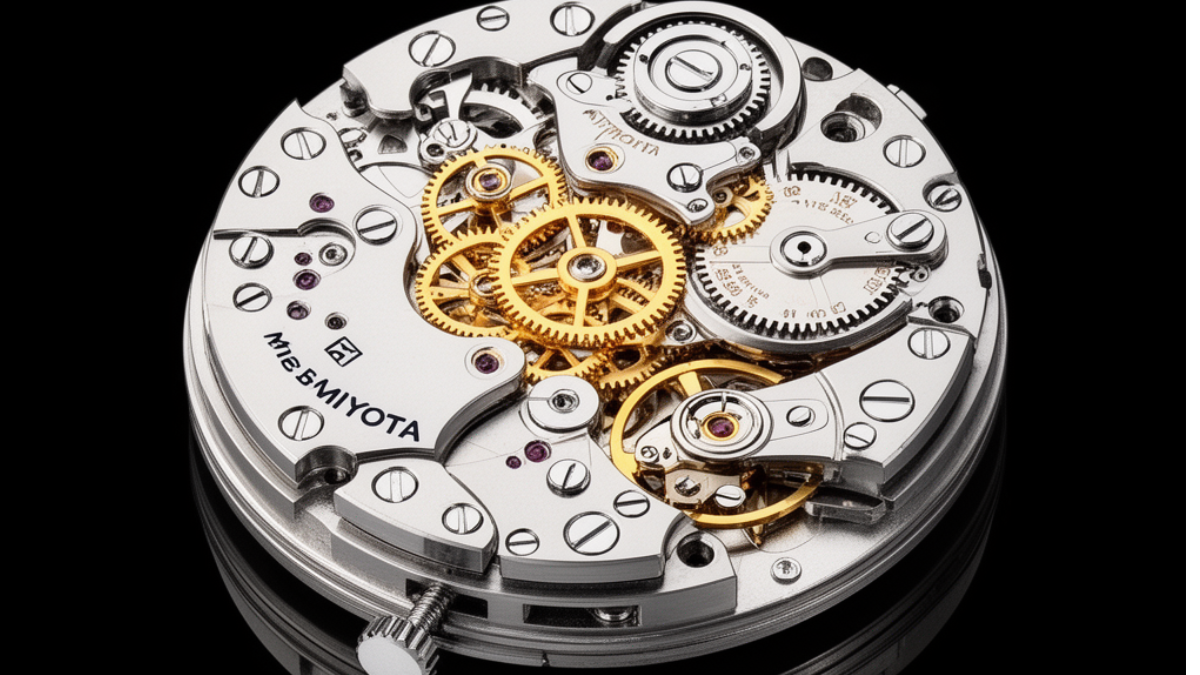
Inside Otsuka Lotec: How a Japanese Independent Watchmaker Turned Existing Workhorse Movements into Mechanical Art
Imagine this.
You are scrolling through endless dive watches and minimalist three‑handers on Instagram, when a strange, industrial square of steel and sapphire stops you mid‑scroll. The dial is not a dial at all, but a small city of gears, discs, and gauges. Numbers don’t circle the edge; they slide, jump, and rewind across windows, as if you’re watching the readout of a piece of scientific equipment rather than a traditional timepiece.
The name on the watch is unfamiliar: Ōtsuka Lōtec.
If you are deep into independent and microbrand watches, you may have heard a whisper of this Japanese atelier: a brand that starts from humble Miyota movements and somehow ends up with satellite hours, double retrogrades, jumping discs, and, eventually, a full in‑house tourbillon and chiming movement. But how, exactly, does an independent brand take the same workhorse calibers used in countless microbrand field watches, and turn them into something that looks like it belongs in a laboratory or on the dashboard of a spacecraft?
This is the story of Otsuka Lotec watch movements: how they begin with mainstream Japanese calibers like the Miyota 9015, 90S5, and 82S5, and layer on proprietary modules so radical they barely resemble the base at all—and how that journey culminates in the in‑house Cal. SSGT of the No.9.
The Hidden Engine Behind Microbrand Watches
Before stepping into Otsuka Lotec’s world, it helps to understand the stage on which it plays.
Most independent and microbrand watches do not design their own movements from the ground up. Instead, they rely on robust “engines” supplied by specialists—companies like Miyota (Citizen), Seiko (TMI), Sellita, or the remaining ETA calibers in circulation. These movements keep time, power the hands, and provide basic functions like date and automatic winding. For a young brand, designing a complete mechanical movement from scratch is both ruinously expensive and technically risky.
Among these off‑the‑shelf engines, Miyota’s 9000 and 8000 series have become some of the most influential calibers in the microbrand world. The Miyota 9015, for example, is a 24‑jewel automatic movement beating at 28,800 vibrations per hour (4 Hz), with a slim 3.9 mm height and a power reserve of approximately 42 hours. It is hand‑windable, hacks, and has a quick‑set date—while costing significantly less than many Swiss equivalents like the ETA 2824‑2.
The Miyota 90S5 is its open‑heart sibling: also 24 jewels, also 28,800 vph, also around 42 hours of power reserve, but with a cut‑out to reveal the balance from the dial side. The more affordable Miyota 82S5, part of the long‑running 8200 family, is a 21‑jewel (in its standard spec) automatic movement running at 21,600 vph (3 Hz) with about 42 hours of power.
Microbrands choose these movements because they are:
- Reliable and widely serviceable
- Accurate enough for daily wear
- Thin and compact, enabling creative cases and dials
- Cost‑effective, leaving budget for design and finishing
Most brands leave them largely as is: a three‑hand automatic with date, sometimes a skeletonized dial to show the balance. But Otsuka Lotec takes a very different path.
Instead of asking, “Which movement can we drop into this design?”, the brand starts from another question entirely:
“How wild can the display be, if a dependable Japanese movement quietly does the work in the background?”
That question sets the tone for everything that follows.
Enter Otsuka Lotec: Gauges, Meters, and Mechanical Poetry
Ōtsuka Lōtec is a Japanese independent watch brand created by watchmaker Jiro Katayama. From the very beginning, Katayama’s watches have looked less like traditional dress or sports watches, and more like precision instruments—analog meters pulled out of control rooms, industrial plants, or camera bodies, then shrunk to fit on the wrist.
Rather than designing his own base calibers right away, Katayama did what many small independents do: he turned to Miyota automatic movements. But instead of accepting their default three‑hand layout, he used them strictly as engines. Above them, he built his own in‑house modules: stacks of additional gears, springs, discs, and cams that translate the steady rotation of the base movement into unusual time displays.
Over more than a decade, this approach evolved through several key models:
- No.5 / No.5 Kai – satellite (wandering) hours on a Miyota 90S5
- No.6 – coaxial double retrograde on a Miyota 9015
- No.7 and No.7.5 – turret‑style jumping hours on a Miyota 82S5
- No.9 – an in‑house, hand‑wound caliber (Cal. SSGT) with tourbillon and chiming hour‑strike
To understand how Otsuka Lotec uses and transforms famous microbrand watch movements, it is worth following those watches in the order they developed—because the path from No.5 to No.9 is also a path from “Miyota plus module” to “fully in‑house movement.”
No.5 Kai: Satellite Hours on a Miyota 90S5
The story really gains momentum with No.5 Kai, a modern evolution of the original No.5 launched in 2012. On paper, its specs sound familiar to anyone in the microbrand world:
- Base movement: Miyota 90S5 + in‑house satellite hour module
- Type: Automatic
- Jewels: 25 jewels + 2 ball bearings
- Frequency: 28,800 vph (4 Hz)
- Power reserve: Approximately 40 hours
- Case diameter: 40.5 mm, thickness 7.6 mm (12.2 mm including crystal)
But if the spec sheet sounds familiar, the dial and movement architecture do not.
A Satellite Hour Watch, Reimagined
No.5 Kai is described as a “satellite hour watch.” Rotating numeral discs move like satellites around the dial, passing by a fixed minute track to show the time. This is a variation of the wandering hours complication, historically seen in high‑end watches but extremely rare in the indie microbrand price bracket.
Here is how Otsuka Lotec does it:
- The Miyota 90S5 provides the driving torque and base timekeeping.
- On top of it, Katayama mounts a proprietary satellite hour module that rearranges the hour display into orbital discs.
- A double reduction gear drives the hour disc, specifically to counter the backlash (play) often seen in satellite-hour systems.
To ensure the complication has real drama, the hour disc engages with a ball‑bearing rollerpositioned at around 8 o’clock. Twice every hour, the disc makes contact with this roller and switches position instantly, mimicking a jumping‑hour action. The seconds disc at 5 o’clock runs continuously, independent of the hour disc’s position, so that there is always something in motion on the dial.
The Smallest Ball Bearing in the World
No.5 Kai carries a quiet world record. Both No.5 and No.5 Kai use two Japanese‑made ball bearings from MinebeaMitsumi, one for switching the hour disc and one at the center of the seconds disc.
The seconds disc uses a 1.5 mm diameter ball bearing, introduced in 2009 and, as of 2025, still recognized by MinebeaMitsumi as the world’s smallest ball bearing. It is a microscopic component, yet it enables the ultra‑smooth rotation of the seconds disc seen on the dial.
Engineering the Space Above the Movement
The case and crystal are designed around the three‑dimensional satellite mechanism. The stainless steel (316L) case is relatively thin—7.6 mm—but the box sapphire crystal rises a full 4.6 mm above it, leaving a high, clear chamber for the wandering‑hours assembly.
Every component under that crystal—the minute track plate, the hour disc, the seconds disc—is positioned to cast its own shadow, reinforcing the sense of depth. While many microbrands use the open‑heart of the Miyota 90S5 as their main point of interest, Otsuka Lotec almost hides it. The star of the show is the module sitting above, and the watch is built around that.
In No.5 Kai, you can already see the pattern: a mainstream microbrand movement serving as a quiet, reliable engine, with a fiercely distinctive in‑house complication bolted on top.
No.6: Coaxial Retrograde on the Miyota 9015
If No.5 Kai is about orbiting satellites, No.6 is about gauges—and here, Otsuka Lotec picks another famous microbrand movement as its foundation: the Miyota 9015.
The 9015 itself is widely regarded as one of the best microbrand watch movements: an automatic caliber with 24 jewels, a 28,800 vph beat rate, hacking seconds, hand winding, date, and a slim 3.9 mm height that makes it a rival to Swiss mainstays like ETA 2824. In Otsuka Lotec’s hands, however, the 9015 becomes almost unrecognizable.
The Industrial Meter on Your Wrist
On No.6, time is shown through a fan‑shaped analog meter on the upper half of the dial. Instead of a circular rotation of hands, both the hour and minute hands sweep along a segment and then snap back to zero in a classic retrograde motion.
The official specification tells the story clearly:
- Movement: Miyota 9015 + in‑house retrograde module
- Automatic
- 26 jewels total
- 28,800 vph (4 Hz)
- Power reserve: approximately 40 hours
- Functions:
- Coaxial retrograde hours and minutes
- Central seconds disc
- Date display to the right of center
The hour and minute hands are mounted on the same axis, both returning instantly to zero at midnight. Otsuka Lotec notes that, by design, there can be up to a 60‑second discrepancy between the precise reset timing of the two hands—reflecting the complexity of how the module interacts with the base movement.
To keep the profile slim, the entire hour‑and‑minute unit is housed in the lower part of the fan‑shaped crystal at 6 o’clock, tucked tightly into the case. The dial is screwed directly onto the movement to align its height perfectly with the bezel. Once again, a standard Miyota automatic sits under a purpose‑built module, driving a display that evokes an industrial gauge more than a watch.
If you look across independent watchmaking more broadly, retrograde displays are not rare—but seeing coaxial double retrogrades powered by a Miyota 9015 in a relatively accessible indie piece is unusual. It’s a prime example of how microbrand‑grade movements can be used as platforms for high‑concept mechanics.
No.7.5: Jumping Hours with Turret Windows and the Miyota 82S5
If No.5 Kai is orbital, and No.6 is analog‑gauge‑like, No.7.5 is architectural. It takes the idea of time as information on a control panel and turns it into a turret of three windows protruding from the top of the case.
Under the hood, things are simpler—at least at the base level. No.7.5 uses the Miyota 82S5, part of the 8200 family that has powered countless affordable mechanical watches over decades. In its standard specification, the 82S5 is an automatic open‑heart movement with 21 jewels, a 21,600 vph frequency (3 Hz), and around a 42‑hour power reserve. It is robust, straightforward, and beloved by many microbrands building entry‑level mechanical pieces.
Otsuka Lotec, unsurprisingly, does something very different with it.
Three Turrets, Three Discs
The official specs for No.7.5 put the picture together:
- Movement: Miyota 82S5 + in‑house jumping hour module
- Automatic
- 24 jewels (combined movement/module)
- 21,600 vph (3 Hz)
- Power reserve: approximately 40 hours
- Functions:
- Jumping hours
- Minutes disc
- Seconds disc
Three windows, arranged turret‑style across the upper part of the 40 mm stainless‑steel case, each show a different disc: one for the jumping hour, one for the minutes, one for the running seconds. At every full hour, the hour disc jumps instantly to the next numeral, while the minute and second discs continue their steady rotation.
The module that makes this possible is entirely in‑house, mounted directly above the 82S5. The clearance between module and case is minimized, so the case can remain a wearable 40 mm in diameter and about 11.2 mm thick (14.8 mm at the thickest point).
Revised and Refined
In 2023, No.7.5 underwent a quiet but meaningful evolution:
- The case material changed from SUS303 to 316L stainless steel.
- The front glass changed from mineral glass to sapphire crystal with anti‑reflective and anti‑fingerprint coatings.
- The fisheye lens above the hour display changed from acrylic to a custom sapphire lens.
Design and machining were also refined to improve stability and durability. Yet the movement concept—Miyota 82S5 as an engine, with an in‑house jumping‑hour module on top—stayed the same.
Most microbrands using the 82S5 lean into its open‑heart layout as a visual centerpiece. Otsuka Lotec does the opposite. The base caliber becomes almost anonymous, hidden beneath a carefully constructed tower of discs and lenses. What remains visible to the wearer is a mechanical language of windows, turrets, and rotating numeric scales, all driven by a movement that many would otherwise consider unglamorous.
From Miyota Engines to an In‑House Heart: Cal. SSGT in the No.9
The trajectory so far—No.5 Kai, No.6, No.7.5—tells a consistent story: take a proven Miyota automatic movement, design a bespoke module, and shape the entire case and crystal around that module. But eventually, Katayama pushes the idea to its logical extreme.
With No.9, Otsuka Lotec introduces Cal. SSGT, a fully in‑house, manually wound movement. It still borrows a few components from elsewhere—but this time, even the base caliber is Otsuka Lotec’s own design.
Cal. SSGT: The Sushi Geta Movement
The specs for Cal. SSGT reveal just how ambitious this step is:
- Type: In-house mechanical movement
- Winding: Manual
- Dimensions: 41.3 mm × 26.4 mm, thickness 10.35 mm
- Jewels: 30 jewels + 5 ball bearings
- Frequency: 18,000 vph (3 Hz)
- Power reserve: Approximately 40 hours
- Complications:
- Jumping hours
- “Rewinding minutes” (a disc‑based retrograde)
- Tourbillon
- Hour‑striking
- Power reserve indicator
- Components: 278 parts, with some elements such as the barrel taken from the venerable Cal. 6498 to leverage proven components where it makes sense.
Katayama named the caliber “SSGT” after a sushi geta—the wooden plate on which sushi is served. He describes the process of layering complications on the main plate as akin to arranging different sushi toppings on a board. The metaphor is apt: Cal. SSGT is a tightly packed arrangement of mechanical “toppings,” each with its own flavor and role.
A Dial Like an Electric Meter
No.9’s 30 mm‑wide square case is essentially a smaller version of an industrial electrical meter or instrument panel, carved in stainless steel with a thick sapphire crystal front. Inside, multiple complications coexist in a way that still feels legible and coherent.
The time display occupies the right half of the dial:
- An upper disc shows the jumping hours.
- A lower disc shows the minutes.
Beneath these discs, a luminous block illuminates the numerals from below, improving legibility in low light. At every full hour, three things happen simultaneously:
- The jumping hour disc advances.
- The rewinding minutes disc snaps back to zero.
- The hour‑striking mechanism sounds a chime.
Rewinding Minutes and Industrial Sound
The rewinding minutes complication is a type of retrograde mechanism, but presented as a rotating disc rather than a hand. Katayama describes its motion as similar to an analog body‑weight scale: a hairspring at the center of the disc stores energy as the minute disc advances, then releases it once per hour to drive the disc back to zero.
On the left side of the dial runs a pipeline‑shaped gong, which the hour‑striking hammerhits each full hour. This is not just a functional choice, but also a design one: the exposed pipeline gong reinforces the watch’s visual identity as an industrial instrument, complete with mechanical “sound design.”
The power reserve appears as a linear indicator just right of center, echoing the visual vocabulary of meters and gauges from earlier Otsuka Lotec models.
Ball Bearings, Again—Now in Ruby
The story of extreme miniaturized ball bearings continues in No.9. Cal. SSGT uses:
- 2.5 mm custom ruby ball bearings, and
- 1.5 mm ball bearings, still cited as the world’s smallest,
both produced by MinebeaMitsumi specifically for Otsuka Lotec. The ruby ball bearings are deployed at the center shaft of the hour disc and at the pivot of the striking hammer. Ruby spheres and steel races form a low‑friction, long‑life support system, integrating high‑precision bearing technology directly into the movement architecture.
At this point, the brand is no longer merely modifying famous microbrand movements. It is building its own caliber and making industrial miniaturization—a hallmark of Japanese engineering—part of its mechanical identity.
What Otsuka Lotec Teaches About Independent and Microbrand Movements
Looked at as a whole, Otsuka Lotec’s progression from No.5 to No.9 maps closely onto the path many independent watchmakers and microbrands dream of:
- Start with proven base movements (Miyota 82S5, 90S5, 9015) to avoid the risk and cost of building a movement from scratch.
- Add value with in‑house modules and unique time displays, rather than cosmetic changes only.
- Gradually accumulate know‑how in design, machining, and assembly of complications.
- Eventually create a fully in‑house caliber, integrating everything learned along the way.
Where Otsuka Lotec stands out is how consistent this path looks when you zoom out.
- No.5 Kai: Miyota 90S5 + satellite hour module, 25 jewels + 2 ball bearings, 28,800 vph, ~40 hours.
- No.6: Miyota 9015 + retrograde module, 26 jewels, 28,800 vph, ~40 hours.
- No.7.5: Miyota 82S5 + jumping‑hour module, 24 jewels, 21,600 vph, ~40 hours.
- No.9: In‑house Cal. SSGT, 30 jewels + 5 ball bearings, 18,000 vph, ~40 hours, with multiple high complications.
All four share a design language rooted in instruments and meters. All four demonstrate how you can use widely available Japanese movements—some of the best microbrand movements in their price class—as building blocks for very individualistic watchmaking.
For collectors and enthusiasts, this has several implications:
- Servicing and reliability:
The Miyota bases (82S5, 90S5, 9015) are proven calibers. Basic servicing and regulation of the base movement should be straightforward for skilled watchmakers globally. The in‑house modules, however, are proprietary; any issues with the satellite hours, retrogrades, or jumping hours will likely need specialist attention, ideally from Otsuka Lotec itself. - Value of the movement vs. the module:
On paper, many microbrand buyers evaluate a watch by its base movement: “Is it a Miyota 9015 or an NH35 or a Sellita SW200?” With Otsuka Lotec, the real value sits in the module and architecture above the base. The calibers are common; the way they are used is anything but. - Path to haute horlogerie:
Cal. SSGT in the No.9 shows that starting from Miyota does not preclude ending up in the realm of serious independent haute horlogerie, complete with tourbillon, chiming mechanism, and bespoke ball bearings. The base calibers were stepping stones, not destinations.
Otsuka Lotec in the Wider Landscape of Indie Movements
When watch enthusiasts talk about “famous movements used by independent and micro brands,” certain names come up again and again: ETA 2824‑2, Sellita SW200‑1, Miyota 9015, Seiko NH35. These are the engines that power thousands of watches.
What makes Otsuka Lotec particularly interesting is that it:
- Chooses Miyota movements that many microbrands already use—82S5, 90S5, 9015.
- Pushes them into territory usually occupied by very expensive independent pieces: wandering hours, jumping hours, coaxial retrogrades, and, later, a tourbillon and hour‑strike.
Instead of chasing the status of “Swiss movement inside,” Otsuka Lotec leans into Japanese movement technology and pairs it with a distinctly Japanese approach to industrial design and miniaturization. The result is a family of watches that quietly argue a powerful point:
A great microbrand or independent watch is not defined by whether it has a “prestige” base caliber. It is defined by what the brand does with that caliber.
In the No.5 Kai, No.6, and No.7.5, that means using Miyota movements as robust, affordable engines and focusing creative effort on modules, displays, and case architecture. In the No.9, it means using all that accumulated knowledge to design a full in‑house movement—but still grounded in practical engineering choices, like borrowing a barrel from Cal. 6498 and integrating industrial‑grade ball bearings.
Bringing It All Together
By the time you have traced Otsuka Lotec from a satellite‑hour Miyota watch to a tourbillon chiming piece with Cal. SSGT, a pattern becomes clear.
Each model is a variation on the same theme:
- Take a reliable Japanese movement respected in the microbrand world.
- Overlay it with a daring mechanical idea—satellite hours, coaxial retrogrades, jumping discs.
- Design the case and crystal around that idea, not around the movement.
- Refine, refine, refine, until that idea can stand on a fully in‑house base.
As a result, Otsuka Lotec’s watches do more than just showcase independent watch movements. They show how a small, focused brand can:
- Use the same Miyota 9015 or 90S5 that powers countless microbrand divers and dress watches, yet deliver an experience that feels utterly singular.
- Gradually move from modifying famous microbrand movements to designing a caliber like Cal. SSGT, with 278 components, 30 jewels, five ball bearings, and complications that would feel at home in the vitrines of haute horlogerie.
- Anchor itself firmly in Japanese engineering culture, from the industrial design language of meters and gauges to the micro‑precision of MinebeaMitsumi ball bearings.
For anyone researching watch movements used by independent and micro brands, Otsuka Lotec is a compelling first chapter. It’s a case study in how to respect the practical realities of small‑scale watchmaking—by leaning on robust calibers like the Miyota 82S5, 90S5, and 9015—while still producing watches that look and feel like nothing else on the market.
And as more collectors discover these pieces, often one Instagram reel or forum post at a time, the quiet Miyota movements beating inside them are gaining a new kind of fame: not just as workhorses, but as the foundations on which some of the most imaginative independent Japanese watches of this generation are being built.
Discover more Japenese Independent Microbrand Watchmakers from KUOE Watches to Hajime Asaoka of Kurono to Kikuchi Nakagawa and Naoya Hida & Co. making waves across the globe.