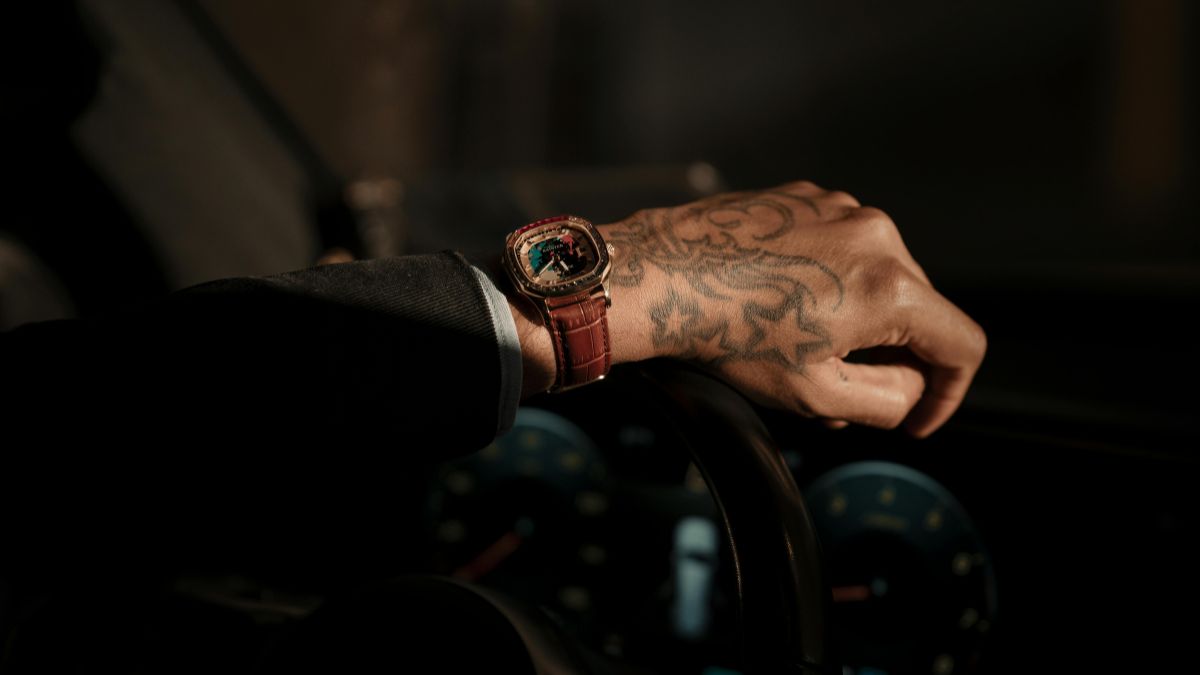

Second Hour: How a Melbourne Microbrand Turned Modern Tool Watches into Accessible Art
When people talk about watchmaking, they still default to Switzerland, Glashütte, maybe Japan if they’re paying attention. Almost nobody pictures Melbourne, a city more famous for coffee and laneways than lathes and balance springs. Yet in 2019, from that same city, a small independent brand quietly appeared that would end up on the radar of collectors around the world: Second Hour.
Second Hour didn’t begin with family archives of pocket watches or a century‑old factory. It began with a midlife crisis.
For three decades, Peter Sargison worked in technology and transformation, consulting on large‑scale corporate and government projects. The work demanded precision and discipline, but it rarely left room for beauty. Away from the office, he was drawn to mechanical watches—tiny machines that seemed to combine engineering with something more emotional. Over time, that side interest grew into a nagging question: What if I applied all this discipline to something I actually love?
Eventually, he answered it. Peter walked away from corporate life, taught himself the mechanics and design of watchmaking from the ground up, and decided to build something of his own. He didn’t do it alone. His wife Akira, with a background in fashion and a sharp eye for proportion and quality, joined him, bringing a complementary obsession with how things look and how people are treated when they buy them.
Together, they named their new company Second Hour—a nod to horology, but also to the idea of a second chapter: the hours Peter chose to give to craft instead of corporate deadlines. From day one, they agreed on a few simple rules: every watch would be designed in‑house in Melbourne, built from high‑grade materials, powered by Swiss or Japanese movements, and sold at prices that felt fair rather than inflated.
This is how a personal pivot in Melbourne turned into one of the most interesting independent Australian watch brandsto emerge in the last decade.
Building the first watch: Gin Clear and a 33‑minute Kickstarter
If you’ve ever launched anything on Kickstarter, you know how uncertain it feels to press that button. When Second Hour’s first watch, the Gin Clear Diver, went live in 2020, it was competing in a crowded field of microbrand divers. Yet something about it caught the eye of enthusiasts immediately.
Within 33 minutes, the Gin Clear campaign was fully funded. Over the course of a month, it raised around A$170,000, making it one of the more successful watch campaigns on the platform at the time. For a debut from a brand with no Swiss heritage and no celebrity endorsements, that was a statement.
The appeal wasn’t hard to understand. Gin Clear was a serious dive watch:
- 200‑meter water resistance
- A 41.55mm stainless‑steel case with ceramic bezel
- A Sellita automatic movement under the hood
- An engraved bezel and distinctive trapezoid markers at 12, 4, and 8 o’clock that gave the dial its own personality
Crucially, it did all this at under £400, positioning the watch firmly within reach of enthusiasts who wanted quality without luxury markup. In an era saturated with homage designs, Gin Clear felt familiar yet distinctly its own—a proper tool watch with a clean design and a story that made sense.
For Peter and Akira, the success was both validation and a turning point. Second Hour was no longer a personal experiment; it was a brand with real customers to serve and expectations to meet.
From one diver to a full family of watches
Success can be dangerous for young brands. Some get comfortable and ride a single hit until the momentum fades. Second Hour did the opposite. After Gin Clear, they quickly began experimenting with different genres, applying the same design sensibility to new shapes and purposes.
Over the next few years, they released a surprisingly diverse set of collections:
- Mandala – a patterned‑dial “sports dress” watch with a focus on intricate texture and color.
- Giant Stride – a dual‑crown dive watch with an internal bezel and bolder presence.
- Sattelberg – a refined field‑style watch with sector dials and a more everyday, all‑rounder feel.
- Memoir – an Art Deco‑inspired rectangular piece on the dressier end of their range.
- Fusion – a later model that blended elements from Sattelberg’s case/bracelet with Mandala’s dial concept.
The names came from a mix of inspiration: Gin Clear from diver slang for perfectly transparent water, Mandala from the Sanskrit word for a geometric symbol of wholeness, Sattelberg from a Papua New Guinea mountain with WWII history, Giant Stride from a classic diving entry technique.
Underneath the variety, a clear design language started to emerge. Second Hour watches tended to share:
- Strong, easily recognisable indices—often with enlarged markers at the cardinal or four‑hour positions.
- Dials with depth and layering—embossed textures, guilloché‑style patterns, carefully framed date windows.
- Thoughtful proportions aimed at daily wear, not just spec sheets.
As the catalog grew, the couple kept their operation deliberately small. Every model was still designed, tested, and quality‑checked in Melbourne, every manufacturing partner visited in person, every batch limited rather than mass‑produced. Second Hour wanted its watches to feel like small‑batch objects with personality, not anonymous commodities.
Mandala: the moment the design language clicked
If Gin Clear proved that Second Hour could build a legitimate diver, Mandala showed that they could do something more ambitious: create a watch where the dial itself carries the story.
First introduced in 2021 and refined through multiple generations, Mandala took its name seriously. The dial was conceived as a contemporary interpretation of a mandala—a geometric circular motif representing connection and harmony. By the time the Mandala Mk3 arrived in 2025, that concept had been fully realized.
The Mk3 features an expanded, guilloché‑style center with deep, radiating engraving, surrounded by a sloped chapter ring that adds both legibility and a sense of depth. The texture isn’t just printed; it’s deeply etched, giving the dial a richness more commonly associated with watches far above its price bracket.
Color plays a huge role. Between the brand’s own catalog and enthusiast coverage, seven primary Mk3 dial variants stand out:
- Silver Blue
- Salmon
- Bumblebee (high‑contrast yellow and black)
- Mint tones
- Bull’s‑eye style blues and reds
- Classic black options
Some combinations read almost dressy, others unapologetically sporty, but all of them feel unmistakably Mandala—especially when combined with the enlarged markers every four hours, a quiet signature that runs through several Second Hour lines.
The case that carries this dial hits a modern sweet spot:
- 40mm diameter, but multiple reviewers and owners note that it wears smaller thanks to careful lug design.
- Around 46–47mm lug‑to‑lug.
- 10.5–11mm thick, including the sapphire crystal.
In other words: slim enough to slip under a cuff, substantial enough to feel like a “proper” watch, not a dress relic.
Then there’s the steel itself. Mandala Mk3 uses 316L stainless steel that has been surface‑hardened to 1200 Vickers, dramatically increasing scratch resistance over normal cases. For context, standard 316L usually sits around 150–200 Vickers. This treatment keeps the watch looking crisp far longer, especially on polished edges that would otherwise pick up desk‑diving scars.
On the movement side, the Mandala Mk3 runs the Miyota 9015—a high‑beat (28,800 vph) Japanese automatic with 24 jewels and around 42 hours of power reserve. Second Hour decorates the rotor and displays it behind a sapphire caseback. More importantly, they take the time to regulate the movement rather than dropping it in at factory tolerances, aiming for performance tighter than the broad –10/+30 second/day ranges many brands accept at this price level.
Even the bracelet feels considered: a seven‑link design with alternating brushed and polished surfaces, solid end links, screw pins for sizing, quick‑release spring bars, and a milled clasp with push‑button on‑the‑fly micro‑adjustment—a feature many larger brands still reserve for significantly more expensive pieces.
All of this arrives at around US$570 / A$920 retail, putting the Mandala Mk3 firmly in the enthusiast sweet spot: not cheap, but dramatically more watch than the price suggests.
With Mandala, Second Hour managed something that many microbrands never quite achieve: they made a watch that you can recognise from across a room, even if you’ve only seen it online before.
Giant Stride and Sattelberg: pushing into tool‑watch territory
While Mandala anchored the “sports dress” side of the catalog, Second Hour expanded in parallel into harder‑edged tool watches.
The Giant Stride took the underlying dive DNA of Gin Clear and dialed up the character. This model uses a dual‑crown layout with an internal rotating bezel—one crown for time, one for timing—giving it the purposeful look of classic compressor divers while still feeling contemporary. Case dimensions sit around 42mm wide, 46–47mm lug‑to‑lug, and roughly 13mm thick including the domed sapphire, giving it real wrist presence without straying into dinner‑plate territory.
Under the hood, Giant Stride is powered by the Sellita SW200, a Swiss automatic workhorse familiar to watchmakers around the world. The watch offers 200 meters of water resistance, screw‑down crowns, sapphire crystal, a hardened case, and a fully solid bracelet with micro‑adjustable clasp—very much a proper dive tool for under four figures.
Where Giant Stride stayed unapologetically sporty, the Sattelberg aimed for something more restrained: a field‑inspired daily watch with enough polish to work under a shirt cuff. Sattelberg models typically feature sector‑style dials, clear Arabic or baton markings, and 100‑meter water resistance with screw‑down crown, landing them firmly in the “go anywhere, do anything” category. A stainless bracelet and refined finishing push it towards the versatile end of the tool‑watch spectrum.
Between Mandala, Giant Stride, Sattelberg and the evolving Memoir rectangular line—an Art Deco‑inspired piece with a Swiss quartz movement and 50‑meter water resistance—Second Hour built a catalog that touched almost every use case while still feeling coherent.
Behind the scenes: how Second Hour actually works
For all the visual variety, there are a few constants behind every Second Hour model.
First, every watch is designed in‑house in Melbourne. The team doesn’t buy off‑the‑shelf cases or dials from generic catalogs and slap a logo on them. Each model is a ground‑up design, iterated and tested on the wrist until Peter and Akira are happy with proportions and details.
Second, they insist on a level of involvement that’s rare at their scale. Brand materials and retailer profiles alike emphasize that:
- Every manufacturing partner is personally visited.
- Every component choice—from Miyota or Sellita movements to sapphire crystals and gaskets—is evaluated for long‑term reliability, not just cost.
- Every watch is tested and quality‑checked in Melbourne before it goes out to a customer or dealer.
Third, they are unapologetically small‑batch. Models are released in limited runs, updated through new generations (MkII, MkIII) rather than kept static, and retired once they’ve run their course. This gives early versions—like the original Gin Clear or Mandala MkI/MkII—a certain collectability, and ensures that what’s on your wrist today won’t be on every third person you meet tomorrow.
Philosophically, the brand positions itself as a reaction against disposable culture. Their about page talks explicitly about rejecting throwaway products and designing watches to be “worn for decades, inherited, and noticed,” with the goal of making objects that carry stories rather than simply filling a slot in a trend cycle.
In other words, Second Hour is not trying to be the next big global volume brand. It’s trying to be the sort of company where, if you email with a question, you’re effectively writing to the people who designed your watch, not a customer‑service outsourcing firm.
Crossing oceans: dealers, Mandala Mk3 pre‑orders, and Gin Clear 3
By 2024–2026, the quiet experiment from Melbourne had become an international microbrand. Enthusiast communities in Europe and North America began to pick up on Second Hour’s work; soon after, specialist retailers followed.
Today you can find Second Hour at:
- Chronofactum in Germany, which highlights them as an Australian microbrand built on high personal quality standards and a dislike of overpriced watches, noting that all watches are designed, tested and quality‑checked in Melbourne.
- WatchBandit in Europe, which describes them as an “independent and family‑owned company” combining classic styles with a modern twist and using Japanese or Swiss automatic movements.
- Dedicated microbrand shops such as The Microbrand Store and other regional retailers offering Mandala and earlier Gin Clear/Mandala variants to local audiences.
In early 2025, Second Hour’s own posts and community forums buzzed around the Mandala Mk3 pre‑order, scheduled for 31 January at 4pm Melbourne time, with parallel times listed for Berlin, Paris, New York, and Los Angeles—an explicit acknowledgment that the customer base now spans multiple continents. Pricing was confirmed at US$570 / A$920, with deliveries planned a few months later.
At the same time, social media clips from WatchBandit and others in 2026 show the Gin Clear 3 arriving in Europe, complete with the now‑familiar hardened case, ceramic bezel, and refined dial design. Hashtags like #secondhourginclear and #teamwatchbandit attach the once‑Kickstarter‑only diver to a wider retail network.
For a brand that didn’t exist before 2019, that trajectory is remarkable: from a 33‑minute‑funded Kickstarter dive watch to a global microbrand with multiple established lines, third‑generation models, and a presence in specialist boutiques across several regions.
Why Second Hour matters in the independent & microbrand space
In the broader story of independent and micro watch brands, Second Hour occupies an interesting niche.
It isn’t an AHCI‑level atelier hand‑finishing tourbillons in the Swiss mountains. It isn’t a giant like Rolex or Grand Seiko, independent in ownership but industrial in scale. It’s something in between: a small, founder‑driven company that designs every case and dial itself, relies on proven Swiss and Japanese movements, and obsesses over details like hardness coatings, on‑the‑fly clasps, and deeply etched dials—all while keeping prices at levels a working collector can still reach.
In practical terms, that means:
- If you want a distinctive daily watch that doesn’t look like a homage to a mainstream Swiss diver, the Mandala Mk3 and Sattelberg are compelling options.
- If you want a Swiss‑powered dual‑crown dive watch under four figures, the Giant Stride is hard to ignore.
- If you want a brand where emailing support likely reaches the founders themselves, Second Hour fits the bill better than most.
More broadly, Second Hour demonstrates how much room there still is at the intersection of independent watchmaking and microbrands. You don’t need your own movement factory to provide value; you need ideas, taste, and the discipline to execute those ideas to a high standard without cutting corners.
From a distance, one more microbrand might not seem like a big deal. But when you look closer—at the story of a midlife career change, the careful evolution from Gin Clear to Mandala Mk3 and Fusion, the hardened steel cases and thoughtful dials—you start to see why this particular Australian name keeps coming up in collector conversations.
In an industry often dominated by marketing budgets and historic logos, Second Hour is a reminder that great watches can still come from unexpected places: a husband‑and‑wife team in Melbourne, working their way through a second chapter, one small‑batch release at a time.